They Were Trying to Make Wallpaper. They Made Something Much Better.
They Were Trying to Make Wallpaper. They Made Something Much Better.
Picture this: you open a package, and before you even look at what's inside, your fingers are already hunting for that first bubble. You find it. You press. Pop. And somehow, the day feels a little better.
Bubble Wrap is one of those things that's so woven into daily life that most people never stop to ask where it came from. The answer, it turns out, involves a pair of engineers, a failed interior design pitch, and one of the happiest accidents in American manufacturing history.
The Shower Curtain Experiment That Went Sideways
In 1957, Alfred Fielding and Marc Chavannes were working out of a garage in Hawthorne, New Jersey, chasing what seemed like a genuinely promising idea: textured wallpaper. The design world was shifting, modernism was having a moment, and the two inventors believed that a three-dimensional wall covering could find a real market with homeowners looking to add depth and tactile interest to their living spaces.
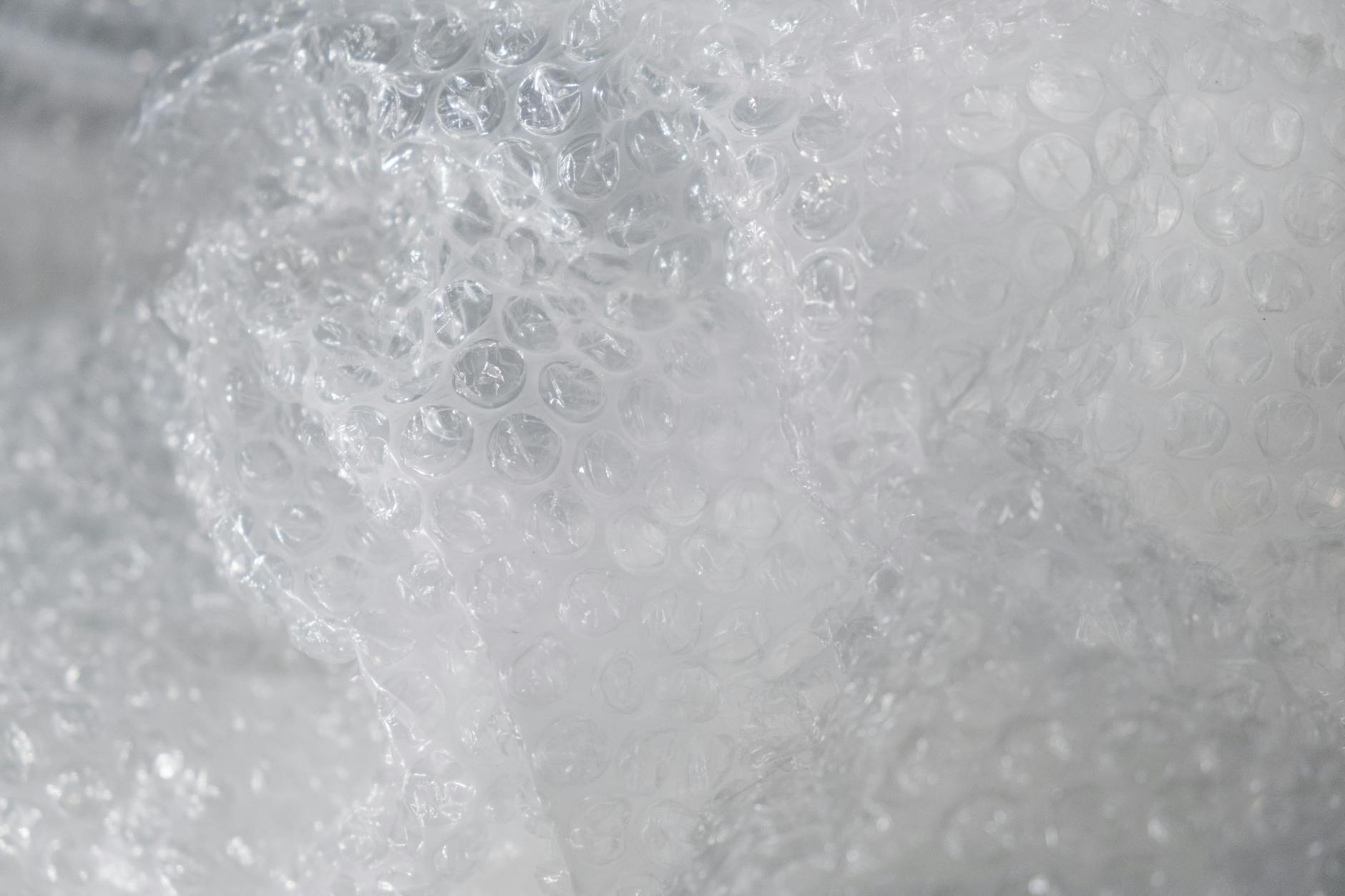
Their method was simple enough. They took two plastic shower curtains and fed them through a heat-sealing machine, trapping pockets of air between the layers as the material came out the other side. What they got was a sheet of raised, air-filled bubbles — flexible, lightweight, and oddly satisfying to touch.
It was also, as a wallpaper product, a complete disaster. Nobody wanted to cover their walls in plastic bubbles. The idea went nowhere.
But Fielding and Chavannes weren't ready to walk away from what they'd made. They spent the next few years trying to find a purpose for their bubble-covered plastic sheets, pitching it as greenhouse insulation and even as a cushioned underlayer for carpet. Those ideas didn't go anywhere either.
Then, in 1960, IBM came calling.
The Computer That Changed Everything
IBM was preparing to ship its new 1401 computer — a machine that, at the time, represented cutting-edge business technology. The problem was that computers in 1960 were not small, delicate things you could drop into a padded envelope. They were large, expensive, and fragile, and getting them from the factory to the customer without damage was a genuine logistical challenge.
Fielding and Chavannes pitched their bubble-filled plastic as a protective wrapping material. IBM bit. The partnership worked, and Sealed Air Corporation — the company the two inventors had formally founded — suddenly had its first real product with a real commercial future.
Within a few years, Bubble Wrap had moved well beyond the tech industry. By the mid-1960s, it was being used to protect glassware, electronics, medical equipment, and fragile goods of all kinds. As mail-order shopping grew through the 1970s and 1980s, demand expanded steadily. When e-commerce exploded in the 1990s and 2000s, Bubble Wrap went from useful to essential. Today, Sealed Air is a multi-billion-dollar company, and the product that started as a novelty wall treatment ships in rolls and sheets to warehouses, businesses, and homes across the country every single day.
Why Popping It Feels So Good
Here's where the story gets genuinely interesting, because Bubble Wrap's cultural footprint goes way beyond shipping and logistics. At some point — nobody can quite pinpoint when — people started popping it for fun. Not to test whether it was damaged. Not by accident. Just for the pure, repetitive satisfaction of it.
This became common enough that researchers actually decided to study it. Psychologists at the University of Maryland conducted experiments in the 1990s examining what happened to people's mood and stress levels after popping Bubble Wrap. Their findings suggested that the act produced measurable feelings of calm and relaxation, and that participants reported feeling more alert and less tense afterward. The theory is that the repetitive physical motion, combined with the predictable sensory reward of each pop, engages the nervous system in a way that mimics other stress-relief behaviors — similar to fidgeting, squeezing a stress ball, or cracking your knuckles.
Sealed Air leaned into this. The company has released "pop-free" Bubble Wrap variants designed for shipping efficiency, and each time they do, the internet reacts with something close to genuine grief. There's a reason for that. The popping isn't incidental to Bubble Wrap's identity — for millions of people, it is the product.
From Garage Experiment to Global Icon
There's a lesson buried in the Bubble Wrap story that goes beyond the fun of a good accidental invention. Fielding and Chavannes didn't succeed because they had the right idea at the start. They succeeded because they kept looking for the right application after the wrong one failed. The material was always good. It just needed to find its moment.
That moment came in a shipping room at IBM, and it's been popping ever since.
Next time a package lands on your doorstep and you find yourself instinctively reaching for those bubbles before you've even read the return label, you're participating in a tradition that traces back to a New Jersey garage and two guys who really, really thought the world needed plastic wallpaper.
They were wrong about that. They were accidentally right about everything else.