The Circus Vendor's Messy Problem That Revolutionized American Fast Food
The Great American Eating Problem
In 1880s America, eating on the street was a messy, dangerous business. Food vendors hawked everything from oysters to roasted corn, but most handheld foods required customers to burn their fingers, stain their clothes, or risk food poisoning from questionable utensils. The traveling circus circuit — America's first major entertainment industry — faced this problem on an industrial scale.
Every day, thousands of hungry spectators demanded food between acts, during intermissions, and while walking between tents. Vendors needed to serve hot, satisfying meals quickly and cleanly to crowds that included everyone from farm families to city sophisticates. The solution they developed would accidentally reshape how all Americans think about fast food.
When the Gloves Came Off
The exact origin story has several competing versions, but the most credible traces back to a German immigrant named Charles Feltman, who worked the Coney Island circuit in the 1860s and 70s. Feltman sold hot sausages from a portable cart, and his customers ate them with gloves — thin cloth hand coverings that protected fingers from the scalding meat.
 Photo: Coney Island, via openlab.citytech.cuny.edu
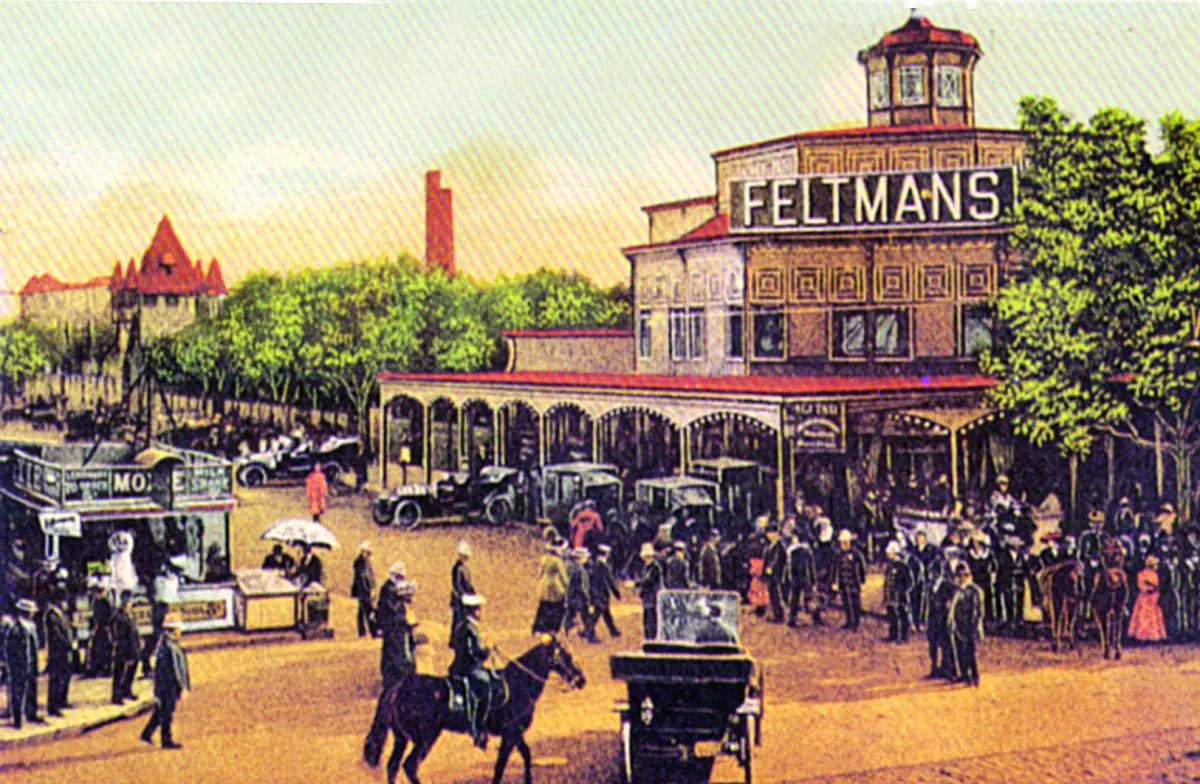 Photo: Charles Feltman, via www.coneyislandhistory.org
But gloves were expensive, got dirty quickly, and required constant washing. On busy circus days, Feltman would run out of clean gloves by mid-afternoon, leaving him with a cart full of hot sausages and no way to serve them safely.
The breakthrough came during a particularly chaotic afternoon when Feltman faced a crowd of hungry circus-goers and an empty glove basket. Desperate to keep selling, he grabbed a loaf of bread, sliced it lengthwise, and stuffed a sausage inside. The bread acted as an edible glove, protecting customers' hands while adding substance to the meal.
Customers loved it immediately. The bread soaked up the sausage's flavorful juices, making each bite more satisfying than the plain meat they'd been eating. More importantly, they could walk around while eating, freeing their hands for applause, pointing, and handling money.
The Portable Food Revolution
Feltman's innovation spread through the circus circuit faster than gossip about the bearded lady. Other vendors began experimenting with bread-wrapped foods, creating portable versions of traditional meals. The hot dog in a bun became the template for American fast food: handheld, filling, affordable, and designed for people in motion.
This was revolutionary in ways that weren't immediately obvious. Traditional American meals required sitting down with proper utensils and table settings. But circus culture — and increasingly, American urban culture — demanded food that could be consumed while standing, walking, or watching entertainment.
The circus vendors accidentally solved a problem that was emerging across American society: how to feed people who didn't have time to stop and sit down for formal meals. Factory workers, urban commuters, and entertainment-seekers all needed the same thing Feltman's circus customers wanted — fast, clean, portable food.
From Big Top to Main Street
By the 1890s, the hot dog bun had migrated from circus grounds to city streets. Vendors outside factories, near train stations, and at sporting events adopted Feltman's innovation. The 1893 World's Columbian Exposition in Chicago featured dozens of hot dog vendors, introducing the concept to visitors from across the country.
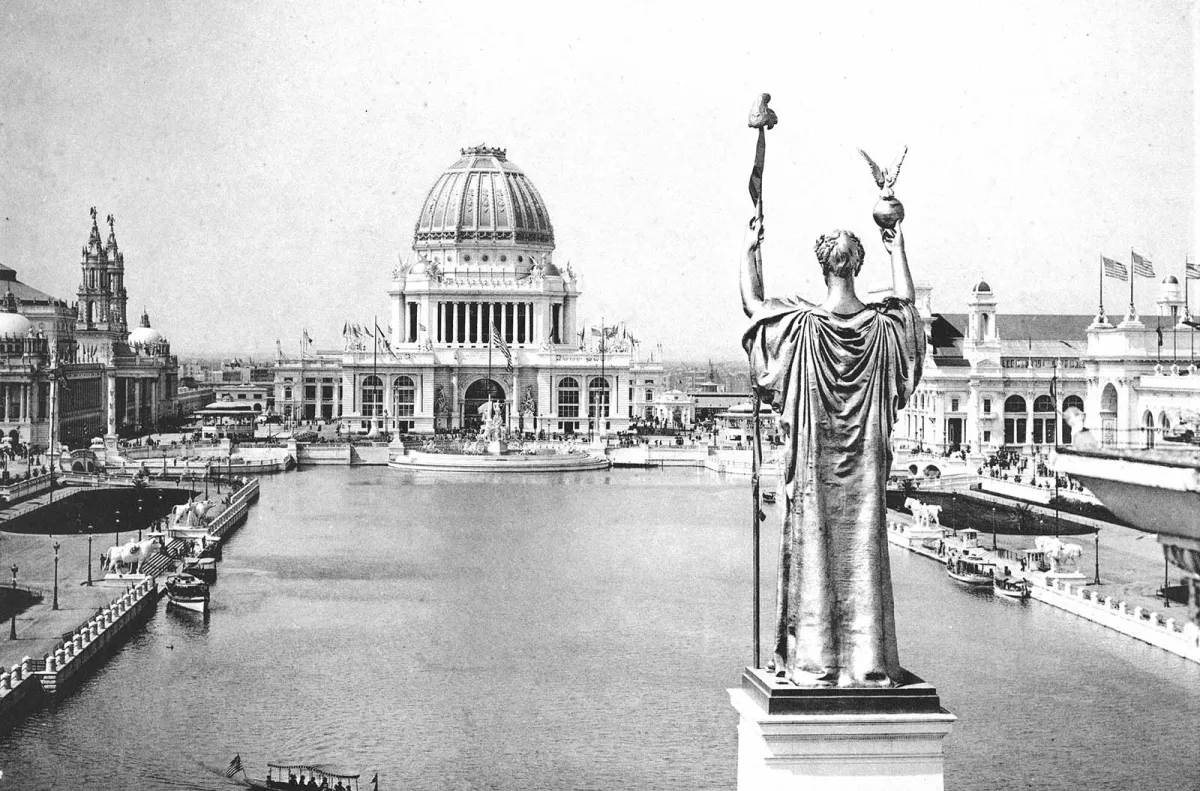 Photo: World's Columbian Exposition, via rarehistoricalphotos.com
But the real transformation happened at America's growing number of baseball stadiums. The combination of hot dogs and baseball created the perfect storm for portable food culture. Fans needed something they could eat while keeping their eyes on the game, and vendors needed something they could carry through crowded bleachers.
Harry Stevens, a concessionaire at the New York Polo Grounds, refined the circus model for sporting events. He developed the first standardized hot dog buns, created the "hot dog!" sales call, and established the pricing model (affordable enough for working-class fans, profitable enough to justify the logistics) that would define American concession food.
The Assembly Line Approach to Eating
The hot dog bun represented something uniquely American: the application of industrial efficiency to food preparation and consumption. Unlike European street foods, which often required skilled preparation and leisurely consumption, the American hot dog was designed for speed and standardization.
Vendors could prepare dozens of hot dogs in advance, keeping them warm in portable containers. Customers could order, pay, and receive their food in seconds. The entire transaction was optimized for high volume and quick turnover — principles that would later define everything from McDonald's to food trucks.
This efficiency wasn't just convenient; it was democratic. The hot dog bun made quality protein accessible to working-class Americans who couldn't afford restaurant meals but needed more than just bread and water. A hot dog provided meat, carbohydrates, and vegetables (if you counted the optional onions and sauerkraut) in a single, affordable package.
The Cultural Bite That Changed Everything
The hot dog bun's influence extended far beyond food service. It established the American preference for handheld, customizable meals that could be eaten anywhere. This preference would later drive the success of hamburgers, sandwiches, tacos, and eventually every form of American fast food.
More subtly, the hot dog bun reflected changing American social patterns. Traditional meals had been formal, family-centered affairs that reinforced social hierarchies and cultural traditions. But circus culture — and the portable food it created — was democratic, individualistic, and focused on immediate pleasure rather than social ritual.
By the early 1900s, eating a hot dog had become a distinctly American experience, associated with baseball games, amusement parks, and street festivals. European visitors often remarked on Americans' habit of eating while walking, standing, or engaging in other activities — behavior that seemed rude or rushed by Old World standards but perfectly practical by American ones.
The Legacy of Circus Innovation
Today, when Americans grab a burger, wrap, or sandwich for lunch, they're participating in a food culture that traces directly back to that desperate circus vendor's improvisation. The idea that food should be portable, efficient, and consumable while multitasking has become so fundamental to American eating habits that we rarely question it.
The hot dog bun also established the template for American food innovation: practical solutions to immediate problems, developed by working-class entrepreneurs and refined through market feedback rather than culinary training. This bottom-up approach to food development would later characterize everything from the hamburger to the food truck revolution.
The Endless Circus
Feltman's simple solution to a glove shortage accidentally created the foundation of America's $200 billion fast food industry. Every drive-through window, every stadium concession stand, and every food truck traces its lineage back to that moment when a circus vendor decided bread could substitute for cloth.
The next time you grab a hot dog at a baseball game or bite into any handheld meal, remember: you're experiencing the legacy of American circus culture, where entertainment, efficiency, and eating merged into something entirely new. Sometimes the most revolutionary innovations come not from laboratories or corporate boardrooms, but from desperate vendors trying to keep hungry crowds happy under the big top.