The Failed Wallpaper That Became America's Favorite Stress Reliever
The Failed Wallpaper That Became America's Favorite Stress Reliever
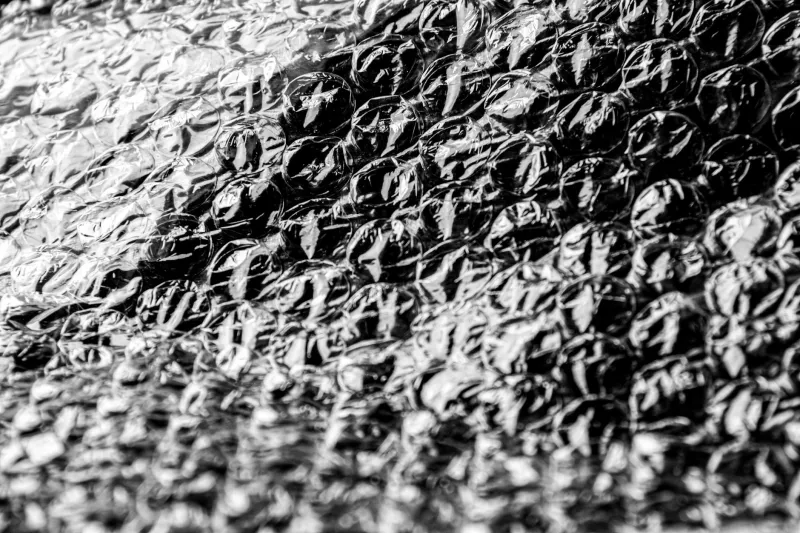
It sits in closets, storage rooms, and shipping departments across America, waiting for its moment. When that moment comes, the ritual is always the same: fingers find the raised bumps, apply pressure, and pop. The satisfaction is instant, universal, and completely inexplicable. We're talking about bubble wrap, of course—the packaging material that somehow became a national obsession.
But here's what might surprise you: bubble wrap was never supposed to protect anything. It was supposed to decorate your living room.
When Good Intentions Go Wrong
The year was 1957, and two engineers named Alfred Fielding and Marc Chavannes were convinced they'd found the future of interior design. Working in a garage in Hawthorne, New Jersey, they were experimenting with ways to create textured wallpaper that would give homes a modern, three-dimensional look.
Their technique seemed promising: seal two shower curtains together, trap air between them, and create a bumpy, interesting surface that would catch light in appealing ways. They called their creation "Air Cap," and they were certain homeowners would love it.
They were spectacularly wrong.
No matter how they marketed it—as wallpaper, as greenhouse insulation, even as pool covers—nobody wanted their bumpy plastic creation. For three years, Air Cap sat in warehouses, a solution in search of a problem that apparently didn't exist.
The Computer That Changed Everything
The breakthrough came from an unexpected source: IBM's new 1401 computer. In 1960, these room-sized machines represented the cutting edge of technology, but they had a serious shipping problem. The delicate electronic components inside were getting damaged during transport, and traditional packaging materials just weren't cutting it.
That's when someone at IBM took a closer look at Fielding and Chavannes' failed wallpaper experiment. Those air-filled bubbles that made such terrible home décor turned out to be perfect shock absorbers. The trapped air could cushion delicate equipment while the plastic remained lightweight and moldable.
Suddenly, Air Cap had found its calling—not as decoration, but as protection.
The Birth of an Empire
Fielding and Chavannes quickly pivoted, founding Sealed Air Corporation and rebranding their product as "Bubble Wrap." The timing couldn't have been better. America was entering the computer age, and fragile electronics needed safe passage from factories to offices across the country.
But it wasn't just computers driving demand. The 1960s saw an explosion in mail-order shopping, delicate consumer electronics, and international shipping. Bubble wrap became the unsung hero of the consumer economy, quietly protecting everything from television tubes to Christmas ornaments.
By the 1970s, Sealed Air was producing millions of square feet of bubble wrap annually. The company had accidentally stumbled into one of the most essential packaging materials in modern commerce.
The Pop Heard 'Round the World
Somewhere along the way, something unexpected happened. People started popping the bubbles—and they couldn't stop.
The phenomenon defied explanation. There was no practical reason to pop bubble wrap bubbles. If anything, it defeated the purpose of the packaging. But the satisfying pop sound and the tactile sensation of bursting the air pockets triggered something primal in human psychology.
Scientists have theorized that popping bubble wrap provides a form of stress relief similar to other repetitive, satisfying activities. The small act of destruction, combined with the immediate auditory and tactile feedback, releases tension in a way that's both harmless and oddly therapeutic.
From Necessity to Obsession
By the 1990s, bubble wrap popping had become a recognized cultural phenomenon. The internet age only amplified this obsession, with websites dedicated to virtual bubble wrap popping and countless videos of people systematically destroying sheets of the stuff.
Sealed Air Corporation, somewhat bemused by their product's second life as a stress toy, eventually embraced it. They created special "bubble wrap appreciation days" and even developed versions specifically designed for popping rather than packaging.
The numbers tell the story: Americans now pop an estimated 4.7 million bubbles every year, turning a packaging material into an unofficial national pastime.
The Billion-Dollar Accident
Today, Sealed Air Corporation is a multi-billion-dollar company, and bubble wrap protects everything from Amazon packages to priceless artwork. The material that nobody wanted as wallpaper now wraps billions of dollars worth of goods annually.
Fielding and Chavannes, the engineers who just wanted to make prettier walls, accidentally created one of the most ubiquitous materials in American commerce. Their failed home improvement project became essential to everything from e-commerce to space missions—NASA uses specialized bubble wrap to protect sensitive equipment.
The Legacy of a Happy Accident
The story of bubble wrap reminds us that innovation rarely follows a straight path. Sometimes the biggest breakthroughs come from spectacular failures, and sometimes the best solutions emerge when we stop trying to solve the original problem.
Next time you receive a package wrapped in bubble wrap, remember: you're holding a piece of accidental history. Those satisfying pops aren't just stress relief—they're the sound of serendipity, the echo of two engineers who failed at making wallpaper but succeeded at something far more important.
And if you can't resist popping a few bubbles, well, you're participating in a tradition that's as American as apple pie and just as inexplicably satisfying.