Play-Doh Was a Cleaning Product Nobody Wanted — Until a Teacher Changed Everything
Play-Doh Was a Cleaning Product Nobody Wanted — Until a Teacher Changed Everything
Before it was the squishy, brightly colored staple of American childhoods, Play-Doh was a commercial failure — a doughy compound manufactured to scrub soot off wallpaper in postwar American homes. When the market it was built for disappeared almost overnight, the product faced extinction. What saved it wasn't a corporate pivot or a marketing campaign. It was a nursery school teacher who noticed that kids couldn't stop playing with the stuff.
The Problem It Was Built to Solve
To understand how Play-Doh came to exist, you need to picture the American home of the late 1940s and early 1950s. Coal heating was still common across much of the country, and it left a persistent, grimy residue on walls and wallpaper. Cleaning that residue off without tearing the delicate paper underneath was a genuine household headache.
A Cincinnati-based compound manufacturer named Noah McVicker developed a pliable, non-toxic dough specifically designed for the job. The material was soft enough to press gently against wallpaper without causing damage, and its texture allowed it to lift the soot away cleanly. It was sold through a sister company called Rainbow Crafts and marketed to janitorial supply stores and households dealing with coal-stained walls.
For a brief moment, it filled a real need.
The Floor Dropped Out
The problem arrived fast and without much warning. As the 1950s progressed, American homes modernized rapidly. Natural gas and electric heating systems replaced coal furnaces in neighborhoods across the country, and with them went the soot problem the compound had been designed to solve. Simultaneously, vinyl wallpaper — easier to wipe clean with a damp cloth — began replacing the older paper varieties the product was built to work with.
Almost overnight, the core market for McVicker's cleaning compound evaporated. The product that had seemed like a practical solution to a common domestic problem was suddenly a solution to a problem most Americans no longer had. Rainbow Crafts was left holding inventory it couldn't move, and the compound's commercial future looked genuinely bleak.
This is the part of the story where most products simply disappear.
A Teacher Sees Something No One Else Did
In 1955, a nursery school teacher in Cincinnati named Kay Zufall — who happened to be the sister-in-law of Noah McVicker — was preparing an art project for her class. She'd read that kids could use the wallpaper cleaning compound as a modeling material, a low-stakes alternative to clay that was softer, easier to work with, and non-toxic.
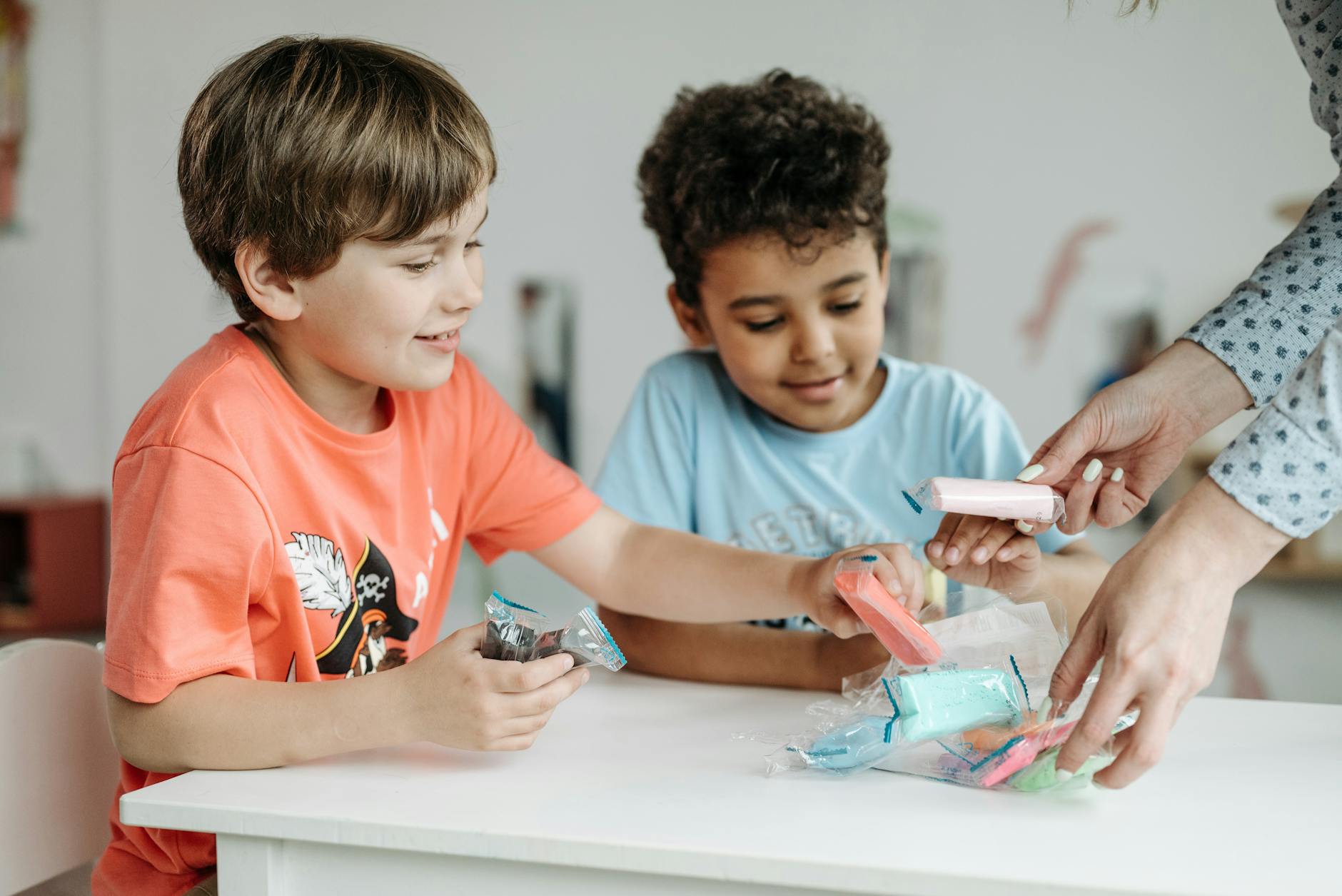
She brought some into her classroom. The response from the children was immediate and unmistakable. They were captivated by it — rolling it, squishing it, shaping it, and starting over. It wasn't just a usable craft material. It was genuinely fun to handle in a way that transcended the specific project she'd planned around it.
Zufall went back to McVicker and made the case directly: this isn't a cleaning product. It's a children's toy. Strip out the detergent, add some color, and sell it as something kids can actually play with.
McVicker, staring at a failing product line, was open to the idea.
From Janitorial Supply to Toy Store Shelf
The reformulated compound — now available in red, yellow, blue, and the iconic off-white — was introduced to the market in 1956 under the name Play-Doh. The detergent was removed, the texture was refined, and the packaging was redesigned entirely around children rather than housekeepers.
The launch strategy was clever in its simplicity. Rather than going straight to toy stores, McVicker arranged for Play-Doh to be demonstrated on a local Cincinnati children's television program. The segment generated immediate demand. Schools and nurseries began placing orders. Within a year, the product had expanded nationally, and by the end of the decade, Play-Doh was a fixture in American kindergartens and living rooms.
The timing was ideal. Postwar America had a booming child population, a growing emphasis on early childhood education, and a consumer market increasingly oriented around family life. A safe, endlessly reusable modeling material for young kids fit neatly into all of it.
Seventy Years of Squishing
Since its debut as a toy, Play-Doh has sold more than three billion cans worldwide. The product line has expanded into dozens of colors and hundreds of themed playsets, and the distinctive smell of the compound — a slightly sweet, faintly salty scent that's essentially impossible to describe to someone who hasn't encountered it — is one of the most broadly recognized sensory memories in American childhood.
The formula itself has remained largely unchanged since the 1950s. Water, salt, and flour form the basic structure, with mineral oil and boric acid helping preserve texture and shelf life. It is, at its core, still a simple dough — not far removed from what McVicker originally cooked up for grimy wallpaper in postwar Cincinnati.
What changed was who it was for.
Kay Zufall spotted something that everyone closer to the product had missed: that the qualities making it useful for cleaning — its pliability, its softness, its forgiving texture — were the exact same qualities that made it irresistible to a five-year-old with an afternoon to fill. She didn't invent Play-Doh. She just understood it better than anyone else in the room.
That, as it turns out, was enough.