The Weekend Was Never Supposed to Exist: One Mill, One Strike, and the Accidental Birth of Saturday Off
Saturday morning. No alarm. The particular quality of light through the curtains that feels different from every other morning of the week. The weekend is so deeply embedded in American life that it's hard to imagine things being any other way.
But for most of human history, there was no weekend. And when it finally arrived, it wasn't because someone decided workers deserved rest. It was an accident — a scheduling compromise that spiraled into one of the most consequential labor reforms in American history.
Before the Weekend, There Was Just Work
For the bulk of the 19th century, American factory workers operated on a six-day schedule. Monday through Saturday, sunrise to well past dark. Sundays were protected by blue laws rooted in Christian tradition — the Sabbath was sacred, legally enforced in many states, and not up for negotiation.
Saturday was a full workday. Half-day Saturdays were a rare concession, offered by some employers as a kind of informal perk, but they were never standard and certainly never guaranteed.
The concept of leisure time as something workers were owed was genuinely radical. The dominant view — among employers, and frankly among many workers who had internalized it — was that idle time led to moral decline. Work was virtue. Rest was suspicious.
The Mill, the Strike, and the Jewish Sabbath
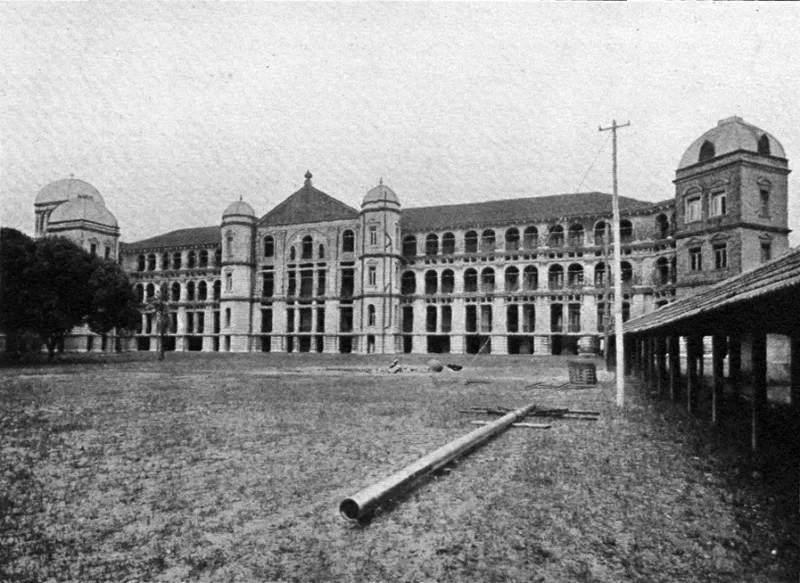
The crack in that worldview appeared, of all places, in a New England cotton mill in 1908.
The specific details vary by account, but the core story is consistent. A textile mill — some historians point to a mill in New England, others to mills across the northeast that were grappling with the same issue simultaneously — employed a significant number of Jewish immigrant workers. These workers observed the Sabbath on Saturday, not Sunday. Under the standard six-day schedule, they were being forced to choose between their jobs and their religious practice every single week.
A labor dispute followed. The workers pushed back. And mill management, facing the prospect of losing a trained workforce over a scheduling conflict, made a pragmatic decision: give everyone Saturday afternoon off, and let the Jewish workers use it as they saw fit.
It wasn't ideology. It wasn't generosity. It was a compromise designed to keep the machines running with a minimum of disruption.
But compromises have consequences.
Henry Ford Makes It Official
Once one mill did it, others followed — not out of solidarity, but because workers started expecting it. By the early 1900s, half-day Saturdays were becoming common enough in certain industries that full Saturdays felt increasingly indefensible.
Then Henry Ford stepped in, and the math changed entirely.
In 1926, Ford Motor Company announced that its plants would operate on a five-day, 40-hour week. Saturday was off. Completely. Ford's reasoning was partly paternalistic — he believed workers needed rest to be productive — but it was also coldly commercial. Ford had figured out something his competitors hadn't: workers who had free time spent money. Specifically, they bought cars. And took road trips. And needed gasoline, and tires, and roadside meals.
The weekend wasn't just a labor concession. It was a consumer market waiting to be created.
Ford's move put enormous pressure on other manufacturers. If Ford workers had Saturdays free, workers everywhere wanted the same. Unions pushed hard. Public opinion, shaped by Ford's considerable propaganda apparatus, began shifting toward the idea that a two-day weekend was reasonable and modern.
The Government Makes It Law
The Great Depression paradoxically accelerated the process. With unemployment devastating the country, labor advocates argued that spreading work hours across more workers — by capping the weekly total — was one way to create more jobs. Shorter hours meant more people employed.
President Franklin Roosevelt's administration agreed. The Fair Labor Standards Act of 1938 established the 40-hour workweek as federal law, requiring overtime pay for anything beyond it. The two-day weekend wasn't explicitly mandated — it emerged as the natural structure once Saturday became economically unattractive to employers.
Thirty years after that mill compromise, the weekend was the law of the land.
What Got Lost in the Victory
Here's the part the triumphant version of this story tends to skip. The 40-hour week was a massive improvement over what came before. But it was also, from the labor movement's perspective, a partial victory at best.
Many union activists in the 1930s weren't fighting for a 40-hour week. They were fighting for a 30-hour week. Six-hour days. More time, not just slightly less work. The 40-hour compromise was, in historical context, the moderate position — the one that business interests could live with.
And then it froze. The 40-hour week has remained essentially unchanged for nearly 90 years, even as productivity has increased dramatically and the nature of work has transformed beyond recognition. The weekend we guard so fiercely is, in a sense, a compromise that never got finished.
The Weekend Is Younger Than You Think
For most Americans under 50, the two-day weekend has always existed. It feels permanent, natural, almost biological — like the human body simply requires it.
But your great-grandparents worked Saturdays. Your great-great-grandparents worked six days a week from childhood. The weekend is not ancient. It is not inevitable. It is a specific historical artifact, born from a religious scheduling conflict in a New England textile mill, scaled up by an automaker's marketing strategy, and locked into law by a Depression-era Congress.
Every time you sleep in on Saturday, you're benefiting from an accident that nobody planned and almost didn't happen.