How Two Inventors' Petty Phone Fight Gave America Its Most Common Word
Pick up your phone right now and imagine not knowing what to say. Not the conversation itself, but the very first word—that automatic "hello" that tumbles out of your mouth without conscious thought. It's so natural, so embedded in human communication, that it's hard to believe there was ever a time when people didn't know how to answer a telephone. But before 1876, that simple greeting was barely part of everyday speech, and its rise to universal adoption came from one of the pettiest professional disagreements in American history.
Before Hello: A World Without Phone Greetings
In the 1870s, face-to-face conversations typically began with formal phrases like "Good morning" or "How do you do?" The word "hello" existed, but it was primarily used to attract attention from a distance—something you might shout across a field or crowded room. It was considered somewhat informal, even crude, for polite conversation.
When Alexander Graham Bell patented the telephone in 1876, he created an entirely new social problem: how should people begin a conversation when they couldn't see each other and weren't even sure the connection had been established? There was no precedent for this type of remote communication in human history.
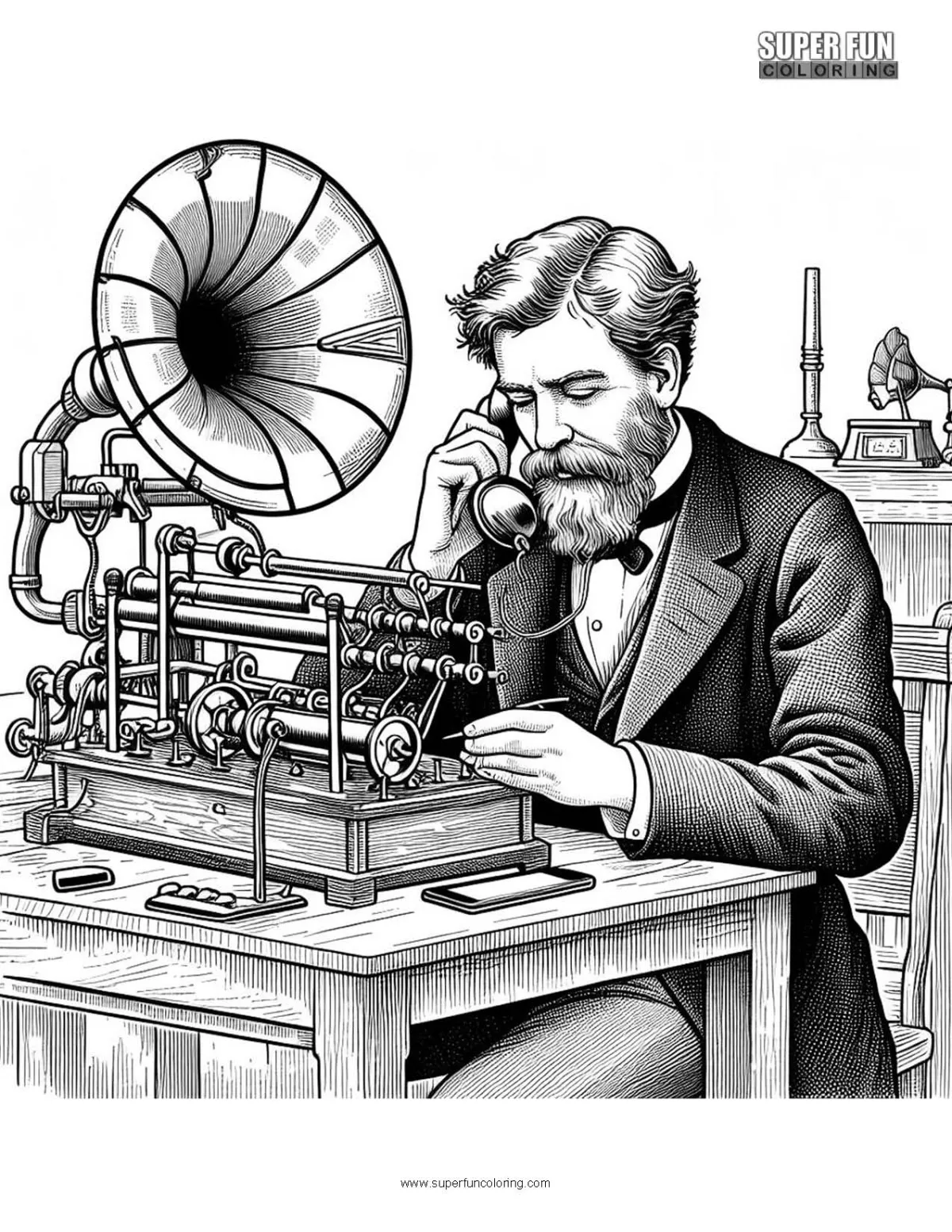 Photo: Alexander Graham Bell, via superfuncoloring.com
Bell himself was acutely aware of this etiquette gap. As someone who had spent years working with the deaf community, he understood how much communication relied on visual cues that the telephone eliminated entirely. The first word spoken would need to serve multiple purposes: confirm the connection was working, identify the speaker's readiness to communicate, and establish a friendly tone.
Bell's Nautical Solution
Bell's answer came from his fascination with maritime culture. He proposed that telephone users should begin conversations with "ahoy," the traditional naval greeting used when hailing other ships. To Bell, this made perfect sense—telephone conversations were essentially about making contact across a void, much like ships communicating across open water.
"Ahoy" had several practical advantages. It was loud, distinctive, and carried well over poor audio connections. The word's maritime associations also suggested the technological marvel of long-distance communication. Bell genuinely believed this nautical greeting would become as standard as tipping one's hat.
For several months after the telephone's commercial introduction, Bell personally demonstrated proper telephone etiquette at public exhibitions, always beginning his calls with a hearty "Ahoy!" He encouraged telephone companies to train their operators using the same greeting, and early telephone manuals recommended the nautical approach.
Edison's Contrarian Streak
Thomas Edison had a different idea, and his disagreement with Bell went deeper than simple preference. Edison was developing his own improvements to telephone technology and saw Bell's etiquette suggestions as unnecessarily pretentious. Where Bell heard nautical sophistication in "ahoy," Edison heard affected formality.
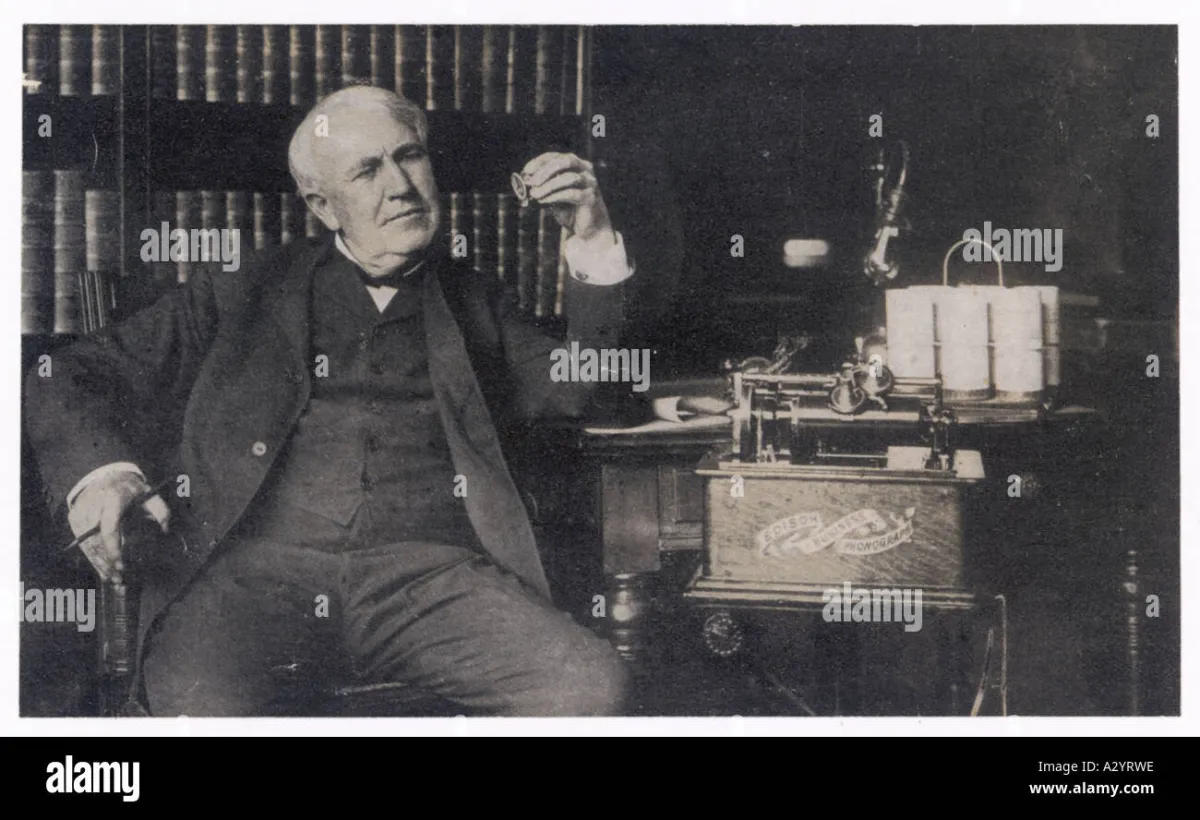 Photo: Thomas Edison, via c8.alamy.com
Edison preferred "hello" precisely because it was more common and less ceremonial. He argued that telephone conversations should feel natural and accessible, not like formal maritime protocols. In Edison's view, the telephone would only achieve mass adoption if using it felt comfortable for ordinary Americans, not just those familiar with shipping terminology.
The disagreement became personal. Edison publicly criticized Bell's "ahoy" recommendation in interviews, calling it impractical and elitist. Bell responded by questioning Edison's understanding of proper communication protocols. What started as a technical debate escalated into a very public feud about the future of American telephone culture.
The Battle for America's Voice
By 1878, the two camps were actively promoting their preferred greetings. Bell continued advocating for "ahoy" in his public demonstrations and encouraged telephone companies using his patents to train operators accordingly. Edison pushed "hello" through his network of business associates and the growing number of telephone systems using his improvements.
The real battleground became the nation's telephone operators. These mostly young women were responsible for connecting calls and inevitably became the public face of telephone communication. Their greeting choice would influence thousands of daily conversations and shape public expectations about telephone etiquette.
Edison's "hello" had a crucial advantage: it was easier for operators to say quickly and clearly. "Ahoy" required more breath and precise pronunciation, while "hello" could be delivered rapidly even during busy periods. For operators handling dozens of connections per hour, this efficiency mattered enormously.
How Economics Settled the Debate
The decision ultimately came down to practical business considerations rather than either inventor's preference. Telephone companies discovered that "hello" reduced training time for new operators and decreased miscommunication on poor connections. The word's shorter, sharper sound cut through static more effectively than "ahoy's" longer vowel sounds.
More importantly, "hello" felt familiar to customers who were already nervous about using the strange new technology. While "ahoy" emphasized the telephone's novelty, "hello" made the experience feel more like normal human conversation.
By 1880, most major telephone companies had standardized on "hello" for operator training. Bell continued advocating for "ahoy" in his personal correspondence, but even he eventually adopted the more popular greeting in his business communications.
The Unintended Revolution
Neither Bell nor Edison anticipated how thoroughly their telephone greeting would transform everyday speech. As telephone use expanded, "hello" migrated from phone conversations into face-to-face interactions. By 1900, Americans were using "hello" as a general greeting in situations that had nothing to do with telephones.
The word's association with modern technology gave it a contemporary, forward-looking quality that appealed to a nation embracing rapid change. "Hello" became shorthand for being modern and connected, literally and figuratively.
Within a generation, "hello" had become so standard that most Americans forgot it had ever been controversial. The telephone greeting that emerged from a petty professional disagreement had quietly revolutionized how humans begin conversations.
The Lasting Echo
Today, "hello" is likely the most frequently spoken word in human communication. Every phone call, video chat, and casual encounter begins with the greeting that Thomas Edison championed over Alexander Graham Bell's maritime alternative. It's become so universal that it's been adopted into dozens of languages worldwide.
The irony is that neither inventor cared much about the word itself—they were fighting about control over America's communication future. Their personal disagreement accidentally created the most enduring piece of telephone etiquette in history, proving that sometimes the most significant cultural changes emerge from the smallest professional rivalries.