When the Army Said No to Peanut Power: The Failed Ration That Built America's Snack Empire
When the Army Said No to Peanut Power: The Failed Ration That Built America's Snack Empire
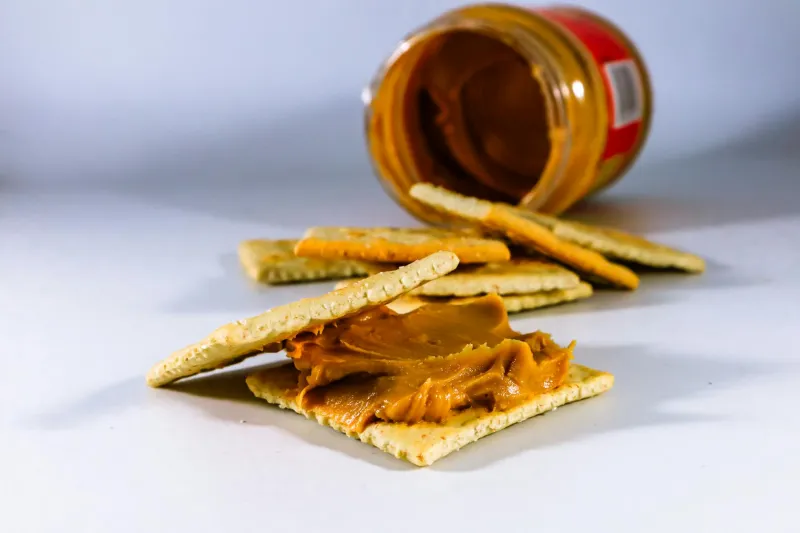
Every time you grab a package of peanut butter crackers from a gas station or unwrap a protein bar at your desk, you're experiencing the legacy of a World War II experiment that the military wanted nothing to do with.
 Photo: World War II, via img-s-msn-com.akamaized.net
The Wartime Problem Nobody Could Solve
By 1943, American food scientists faced an impossible challenge: create portable, nutritious rations that could survive months in a soldier's pack without spoiling, melting, or crumbling into uselessness. The existing C-rations were functional but hardly inspiring—canned meat and vegetables that left troops longing for anything resembling real food.
Dr. George Washington Carver's earlier work with peanuts had proven their nutritional density, but raw peanuts spoiled quickly and peanut butter turned into an oily mess in tropical heat. The solution seemed obvious: compress peanuts into stable, bite-sized blocks that could deliver protein and calories without the mess.
The Quartermaster Food and Nutrition Laboratory in Chicago spent months perfecting what they called "Compressed Peanut Ration Blocks." Using a combination of heat, pressure, and minimal binding agents, they created dense, shelf-stable squares that packed enormous nutritional value into a small package.
 Photo: Quartermaster Food and Nutrition Laboratory, via st3.depositphotos.com
Why the Military Said Thanks, But No Thanks
Field tests revealed a fatal flaw that no amount of engineering could fix: the blocks were simply too dry and dense for battlefield consumption. Soldiers needed water to choke them down, and water was often scarce in combat zones. Worse, eating the compressed peanut blocks left troops desperately thirsty—exactly the opposite of what military nutritionists wanted.
"The men would rather go hungry than eat those peanut bricks," one field report noted. "They bind up the mouth and require too much water for practical field use."
The Army officially rejected the compressed peanut ration in early 1944, leaving tons of experimental blocks and detailed production knowledge gathering dust in government warehouses.
From Military Reject to Commercial Gold Mine
What the military saw as a failure, peacetime entrepreneurs recognized as opportunity. The war had taught American manufacturers how to mass-produce shelf-stable foods, and returning veterans had developed a taste for convenient, portable nutrition during their service years.
In 1946, former Quartermaster Corps food scientist Harold Goodman partnered with Chicago businessman Milton Rosenberg to acquire surplus equipment and production rights from the abandoned peanut ration program. They made one crucial modification: instead of creating dense blocks designed to survive combat conditions, they lightened the compression process to create more palatable bars that still retained the shelf-stability advantages.
Their first commercial product, launched in 1947 as "Energy Squares," targeted factory workers and travelers—people who needed convenient nutrition but had access to beverages to wash it down. The timing was perfect: America's post-war economic boom had created a mobile workforce that ate on the go.
The Infrastructure That Changed Everything
The real breakthrough wasn't just the product—it was the entire production and distribution system that wartime food science had developed. The equipment for compressing and packaging shelf-stable snacks already existed, refined through years of military R&D. More importantly, American consumers had been conditioned by wartime rationing to accept processed, packaged foods as normal parts of their diet.
By the early 1950s, dozens of companies were using variations of the compressed peanut technology to create everything from granola bars to protein snacks. The techniques developed for military rations became the foundation for an entire category of convenience foods that barely existed before the war.
The Accidental Revolution
What makes this story particularly fascinating is how military failure directly enabled civilian success. The Army's rejection forced manufacturers to solve the palatability problem that military specs had ignored. The result was a new class of foods that were convenient enough for everyday life but not so utilitarian that people actively avoided them.
The compressed peanut technology also arrived at exactly the right cultural moment. Post-war America was becoming increasingly mobile and time-conscious. Women were entering the workforce in unprecedented numbers, creating demand for portable lunch options. The interstate highway system was making long-distance car travel common, fueling demand for non-perishable road snacks.
Today's Billion-Dollar Legacy
Walk through any American convenience store today, and you're seeing the direct descendants of those rejected military ration blocks. The techniques for creating shelf-stable, compressed protein snacks now generate billions in annual revenue across categories from energy bars to peanut butter crackers.
Even more remarkably, many of today's most successful snack companies can trace their production methods directly back to those World War II food labs. The binding agents, compression ratios, and packaging innovations that seemed like dead ends in 1944 became the invisible foundation of modern American snacking culture.
Sometimes the most transformative innovations come not from brilliant success stories, but from spectacular failures that force inventors to think differently about what they're really trying to accomplish. In this case, the Army's emphatic "no" to compressed peanut rations opened the door to an entire industry that now feeds millions of Americans every single day.