One Security Consultant's Paranoia Gave You Eight Characters of Daily Misery
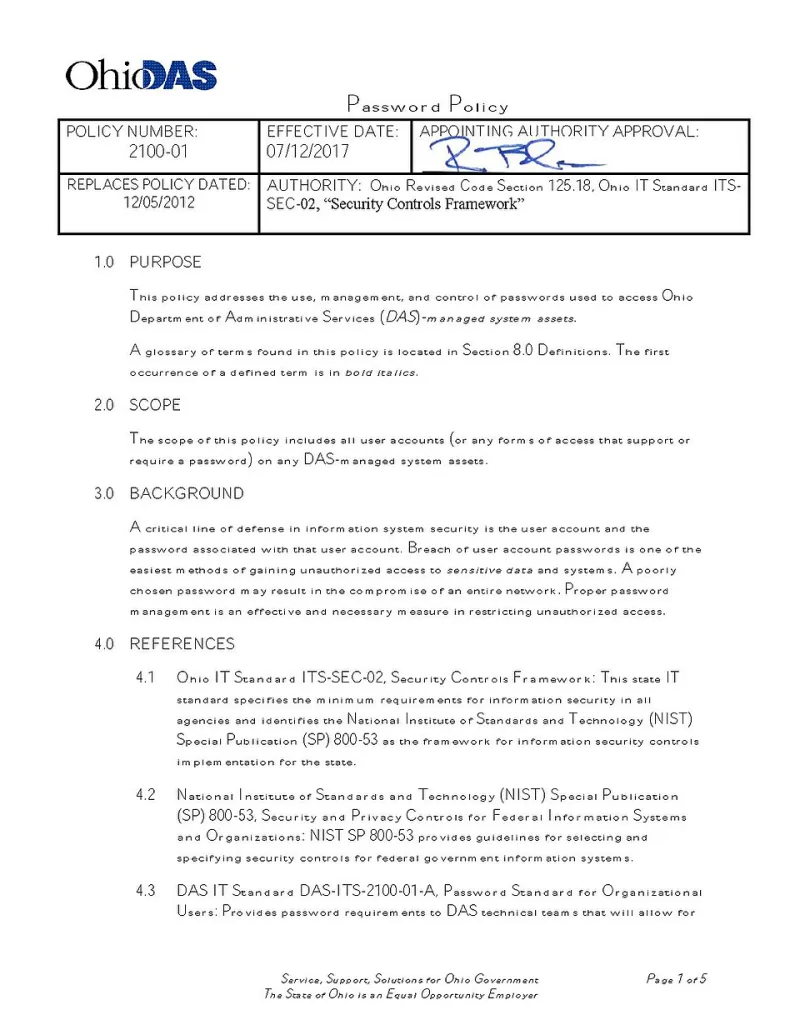
Photo: Ohio. Department of Administrative Services, Public domain, via Wikimedia Commons
You've done it today. Maybe more than once. You've stared at a password field, typed something reasonable, and been told it isn't good enough. Add a capital letter. Add a number. Add a symbol. Make it at least eight characters. Don't use your name. Don't use a word from the dictionary. Don't use anything you'll actually remember.
This particular form of digital suffering has a specific origin. It didn't emerge from a committee or a tech giant's research lab. It came from one security consultant working in the 1970s, operating on instinct, influenced by an art heist he'd read about, trying to solve a problem that barely existed yet.
The Heist That Started Everything
In 1961, thieves broke into the Montreal Museum of Fine Arts and walked out with 18 paintings worth millions. The method wasn't sophisticated — they simply waited until the building was empty and came in through a window. But what fascinated the security world wasn't the theft itself. It was how long it took anyone to notice.
The alarm system had failed silently. Nobody checked. The assumption that the system was working turned out to be the actual vulnerability.
A young security researcher named Bill Burr read about the incident years later and became fixated on the idea of silent failure — systems that appeared to be functioning while quietly falling apart. When Burr moved into computer security consulting in the early 1970s, he carried that fixation with him. Early computer networks were just starting to use password systems, and Burr noticed the same pattern: users picked passwords that felt secure but weren't. The system looked like it was working. It wasn't.
Eight Characters and a Gut Feeling
In 1980, Burr was contracted to help develop security guidelines for a U.S. government computer network. The brief was broad: figure out what makes a password hard to crack. There wasn't much research to draw on. Modern computational power barely existed. Burr was largely working from first principles.
His core insight was reasonable enough: passwords that used only lowercase letters were mathematically weaker than passwords that mixed character types. If you added uppercase letters, numbers, and symbols to the possible pool, the number of combinations an attacker would need to try increased dramatically. On paper, the logic held.
What Burr didn't fully account for was human behavior. His guidelines — minimum eight characters, at least one uppercase, one number, one symbol, changed every 90 days — were designed for a threat model where attackers were systematically trying every possible combination. What actually happened was that users, faced with impossible-to-remember passwords, started doing something predictable: they wrote them down on sticky notes, reused the same password everywhere, or made the most minimal change possible when forced to update. "Password1" became "Password2." The system looked secure. It wasn't.
Burr's guidelines were formalized in a 2003 National Institute of Standards and Technology document called NIST Special Publication 800-63. That document became the foundation for password policies at banks, corporations, government agencies, and eventually almost every website with a login screen in the United States. Within a decade, his gut-instinct guidelines had become the global standard.
The Admission Nobody Wanted to Make
In 2017, Bill Burr gave an interview to the Wall Street Journal. He was 72 years old and had been retired for years. He wanted to say something that had been bothering him for a while.
"Much of what I did, I now regret," he said.
The admission was remarkable. Burr explained that the complexity requirements he'd written hadn't actually improved security in the way he'd hoped. The forced character mixing and mandatory rotation had trained users to create passwords that were simultaneously hard for humans to remember and — because of the predictable workarounds people developed — not that hard for automated systems to crack. A password like "Tr0ub4dor&3" looks strong by the old rules. A passphrase like "correct horse battery staple" — four random common words strung together — is mathematically harder to crack and far easier to remember.
NIST itself updated its guidelines in 2017, quietly reversing many of Burr's original recommendations. The new advice: longer passphrases over complex short passwords, no mandatory rotation unless there's evidence of a breach, and stop making people use symbols if it just means they'll write the password on a Post-it.
The problem is that the original rules had already baked themselves into infrastructure. Banks, healthcare systems, corporate networks, and thousands of websites had spent years building password requirements around the 2003 guidelines. Changing them required policy updates, IT overhauls, and — most challenging of all — convincing management that the security rules they'd followed for two decades were built on a foundation of well-intentioned guesswork.
The Standard That Outlived Its Logic
What makes the password complexity story so interesting isn't the mistake itself — it's how completely a single document, written by one person operating without solid evidence, shaped the daily experience of hundreds of millions of people for over 40 years.
Every time you stare at a rejected password and grudgingly add an exclamation point to the end, you're experiencing the downstream effect of one consultant's paranoia, one famous art heist, and one government document that nobody thought to seriously question until it was everywhere.
The Montreal thieves got away with 18 paintings. Bill Burr got away with reshaping how the entire digital world thinks about security. In terms of lasting impact, it's not even close.