From Death Notices to Birthday Wishes: How Victorian Mourning Cards Accidentally Built Hallmark's Empire
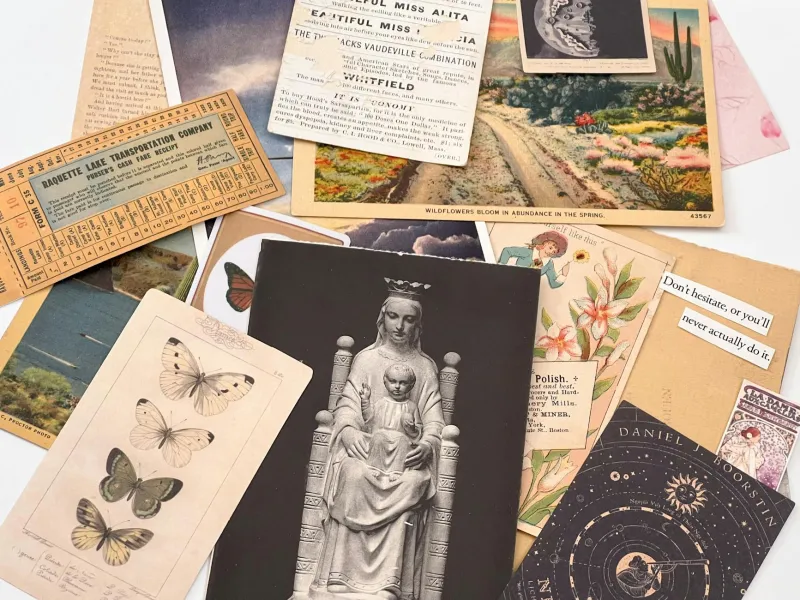
From Death Notices to Birthday Wishes: How Victorian Mourning Cards Accidentally Built Hallmark's Empire
The next time you browse the greeting card aisle at your local drugstore, you're walking through the unintended legacy of America's most morbid mailing tradition. Those cheerful birthday wishes and anniversary sentiments exist because 19th-century Americans were obsessed with announcing death in the most elaborate way possible.
When Death Was America's Most Important Social Event
In Victorian America, death wasn't just a private family matter—it was the neighborhood's biggest news story. Without phones, television, or social media, communities relied on an intricate system of formal notifications to spread word of someone's passing. And nothing was more important than getting the details exactly right.
Mourning cards, also called "memorial cards" or "death notices," became the primary way middle-class families announced deaths to their extended social networks. These weren't simple pieces of paper with basic information. Victorian mourning cards were elaborate productions featuring ornate borders, religious imagery, detailed biographical information, and sometimes even small photographs of the deceased.
By the 1860s, sending mourning cards had become so standardized that most American families kept stacks of blank cards at home, ready to fill in whenever death visited their household. The social pressure to send these notifications was enormous—failing to notify someone of a death was considered a grave insult that could permanently damage relationships.
The Printing Industry That Death Built
All those mourning cards created an enormous business opportunity for America's printing industry. In major cities like New York, Philadelphia, and Boston, specialized printing shops emerged to handle nothing but memorial card orders. These printers developed sophisticated techniques for mass-producing cards with consistent quality and quick turnaround times—because grieving families needed their notifications immediately.
 Photo: New York, via i.ebayimg.com
The mourning card business drove several crucial innovations that later became standard throughout the printing industry. Printers learned to keep large inventories of pre-designed card blanks that could be quickly customized with specific names and dates. They developed efficient systems for small-batch color printing that made elaborate designs affordable for middle-class customers. Most importantly, they mastered the logistics of rapid production and mailing that kept cards flowing to the right people at the right times.
By 1880, mourning card printing had become so profitable that many shops operated year-round solely on death notification orders. The industry had grown large enough to support specialized suppliers who created nothing but mourning card designs, ornate borders, and religious illustrations.
The Business Model That Outlived Its Purpose
The real breakthrough came when a few enterprising printers realized they had built an entire infrastructure around the wrong emotion. If families would pay premium prices for elaborate cards to announce deaths, why wouldn't they pay similar amounts for cards to celebrate births, weddings, and birthdays?
The transition wasn't immediate or obvious. Early celebration cards looked almost identical to mourning cards—same ornate borders, same formal language, same heavy cardstock. But printers gradually learned to adapt their death announcement expertise to happier occasions. They already knew how to mass-produce customizable cards, how to manage seasonal rushes in demand, and how to distribute finished products quickly through the mail.
More importantly, Victorian families had already been trained to think of mailed cards as normal parts of major life events. The social expectation of sending cards—and the guilt associated with forgetting to send them—had been firmly established through decades of mourning card tradition.
From Obligation to Opportunity
The genius of early greeting card entrepreneurs wasn't just recognizing the business opportunity—it was understanding how to transform a social obligation into a commercial celebration. Mourning cards were sent because you had to; greeting cards were sent because you wanted to express something positive.
Joyce Clyde Hall, who founded Hallmark Cards in 1910, explicitly built his business model on the infrastructure that mourning card printers had already created. He used the same production techniques, similar distribution networks, and nearly identical card formats. But instead of announcing deaths, Hall's cards celebrated life's happy moments.
 Photo: Joyce Clyde Hall, via cdn.britannica.com
The transition was so seamless that many customers probably never realized they were participating in the same social ritual that had previously been reserved for death announcements. The act of selecting a card, writing a personal message, and mailing it to someone important remained exactly the same—only the emotional context had changed.
The Mailing Revolution That Made It All Possible
None of this would have been possible without the massive expansion of America's postal system during the late 1800s. The same postal innovations that made mourning cards practical—reliable delivery, affordable stamps, and standardized addressing systems—also made celebration cards feasible.
Victorian families had spent decades learning to trust the mail system with their most important personal communications. By the time greeting cards arrived, Americans were already comfortable with the idea of expressing significant emotions through mailed cards. The infrastructure was ready; entrepreneurs just had to change the message.
The Emotional Architecture That Endures
What's remarkable about this transformation is how completely it succeeded in reversing the emotional associations of card-sending while preserving all the underlying social mechanics. Modern Americans still feel obligated to send cards for major life events. We still agonize over selecting exactly the right message. We still use cards to maintain relationships across distances and to mark important moments in time.
The difference is that we now associate these behaviors with celebration rather than grief. But the fundamental social architecture—the expectation that important news should be shared through specially designed, personally selected, individually mailed cards—comes directly from Victorian mourning traditions.
Today's multi-billion-dollar greeting card industry exists because 19th-century Americans took death notifications so seriously that they accidentally created all the infrastructure necessary for a celebration economy. Sometimes the most successful business innovations come from recognizing that people are already doing exactly what you want them to do—they're just doing it for completely different reasons.