The Birthday Cake Myth: How Sugar Rationing and Clever Marketing Created America's Sweetest Tradition
When Birthday Cakes Were Just Bread
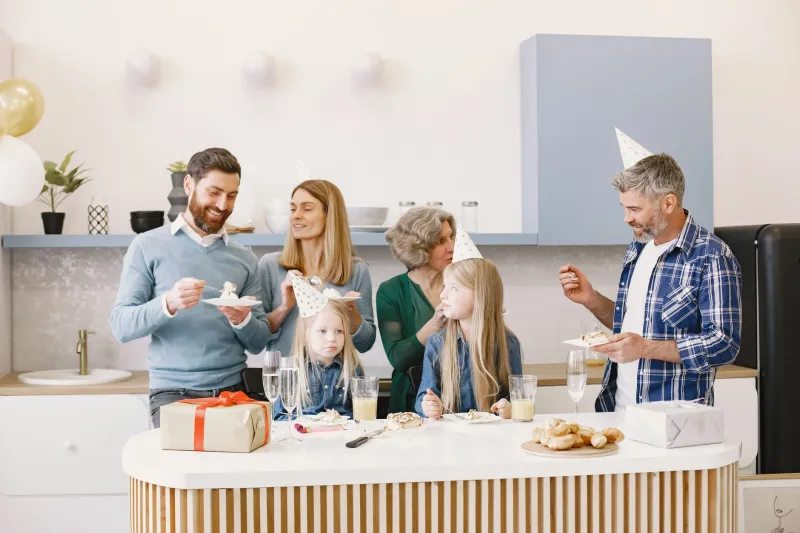
Walk into any American birthday party today, and you'll find an elaborately frosted, multi-layered cake as the centerpiece. It feels ancient, traditional, essential—the kind of ritual passed down through generations. But this seemingly timeless tradition is actually younger than your grandparents.
For most of American history, birthday cakes were simple, bread-like loaves reserved for wealthy families. Poor and middle-class children might receive a plain cake with minimal sweetening, if anything at all. The towering, colorfully frosted confections we now consider standard would have seemed absurdly extravagant to families in 1900.
Sugar was expensive, frosting was labor-intensive, and elaborate decorating required skills most home bakers didn't possess. Birthday celebrations themselves were relatively modest affairs, not the production-heavy events they've become.
The Accidental Revolution of Rationing
World War II changed everything, though not in the way you'd expect. Sugar rationing, which should have made elaborate cakes impossible, accidentally set the stage for their eventual dominance.
During the war, American families received strict sugar rations—often less than half a pound per person per week. This forced home bakers to become creative, experimenting with substitutes and concentrating their precious sugar allowances on special occasions. Birthday cakes became more precious precisely because they were harder to make.
Commercial baking companies, meanwhile, had slightly better access to sugar through industrial allocations. They began marketing pre-made cake mixes as a way for families to create "special occasion" desserts without wasting their personal sugar rations. What started as wartime necessity became peacetime convenience.
Betty Crocker's Brilliant Deception
The real transformation began with a marketing stroke of genius. General Mills introduced Betty Crocker cake mix in 1947, but early sales were disappointing. Market research revealed a surprising problem: the mixes were too convenient. Housewives felt guilty about using them, as if they were cheating on their domestic responsibilities.
 Photo: Betty Crocker, via i.imgflip.com
The solution was counterintuitive. Instead of making the mixes easier to use, General Mills made them slightly more complicated. They removed powdered eggs from the recipe, requiring home bakers to add fresh eggs themselves. This small change made women feel like they were actually "cooking," not just mixing powder with water.
The psychological trick worked brilliantly. Sales exploded, and cake mix became a staple of American kitchens. But more importantly, the consistent results from commercial mixes enabled home bakers to attempt more elaborate decorating projects.
The Suburban Pressure Cooker
Postwar suburban culture created the perfect environment for birthday cake evolution. Middle-class families had more disposable income, larger kitchens, and social pressure to demonstrate domestic success through entertaining.
Women's magazines began featuring increasingly elaborate birthday cake designs. What had once been simple celebrations became opportunities to showcase homemaking skills. Mothers competed to create the most impressive cakes for their children's parties, and the bar kept rising.
Television amplified this trend. Shows like "The Donna Reed Show" and "Leave It to Beaver" depicted elaborate birthday celebrations as normal family activities. Children began expecting the kind of cakes they saw on screen, and parents felt pressure to deliver.
 Photo: Leave It to Beaver, via m.media-amazon.com
 Photo: The Donna Reed Show, via www.podrozepoeuropie.pl
The Frosting Arms Race
The 1950s witnessed what food historians now call the "frosting arms race." Commercial frosting mixes made elaborate decorating accessible to average home bakers. Food coloring became cheaper and more varied. Decorating tools, once available only to professional bakers, appeared in department stores.
Each innovation enabled more complex cake designs, which in turn raised expectations for future celebrations. What began as simple sugar-and-butter frosting evolved into multi-colored, multi-textured architectural projects.
Children's birthday parties became elaborate productions featuring themed cakes that matched party decorations, favors, and entertainment. The humble birthday cake had become the star of an increasingly complex cultural performance.
Manufacturing Tradition
By the 1960s, the elaborate American birthday cake had become so normalized that people assumed it was traditional. Bakeries began offering increasingly sophisticated custom designs. Grocery stores dedicated entire aisles to cake decorating supplies. What had been invented within living memory felt like ancient custom.
The irony is remarkable: a tradition that feels timeless was actually manufactured through wartime rationing, commercial marketing, and suburban social pressure. The birthday cakes that seem most "authentically American" are actually products of mid-20th century consumer culture.
The Sweet Success of Invented Tradition
Today, Americans spend billions annually on birthday cake supplies, and the elaborate frosted cake has become one of our most recognizable cultural exports. Other countries have adopted American-style birthday celebrations, complete with towering, decorated cakes that would have seemed impossible to previous generations.
The transformation happened so quickly and completely that most Americans have no idea their "traditional" birthday cake is actually a recent invention. We've successfully convinced ourselves that something created by wartime rationing, clever marketing, and suburban competition is an ancient ritual.
The Recipe for Cultural Change
The American birthday cake story reveals how quickly new traditions can feel ancient when they serve psychological and social needs. The elaborate cakes satisfied postwar desires for abundance, domestic achievement, and childhood celebration in ways that simple bread-like desserts couldn't match.
What feels like timeless tradition is actually a perfect storm of historical accidents: wartime scarcity that made special occasions more precious, commercial innovation that made complexity achievable, and social pressure that made elaborateness expected.
The next time you see a towering, frosted birthday cake, remember that you're looking at one of America's newest "ancient" traditions—a sweet reminder that culture changes faster than we realize, and that sometimes our most cherished customs are actually clever inventions in disguise.