Gutter Balls and God-Fearing Laws: How Bowling Went From Banned to Beloved
Walk into any mid-sized American town and you'll find one. The neon sign. The rental shoes. The thunderous crack of a strike echoing off linoleum floors. Bowling alleys feel as American as apple pie — wholesome, unpretentious, and completely unremarkable. But the road that got bowling into those suburban strip malls is anything but ordinary. It runs straight through gambling dens, colonial courtrooms, and one of the cleverest legal loopholes in American sports history.
When Bowling Was Basically Illegal
Bowling is old. Really old. Anthropologists have found evidence of a rudimentary pin-and-ball game in Egyptian tombs dating back to 3200 BC. By the time Dutch and German settlers brought their version — called kegels — to the American colonies in the 1600s, the game had been a European staple for centuries.
But the colonists' version of bowling wasn't the family-friendly pastime we know today. Early American bowling greens and indoor lanes were attached almost exclusively to taverns and gambling establishments. Men wagered heavily on the outcome of matches. Brawls were common. Productivity suffered. Colonial authorities were not amused.
Connecticut passed one of the first recorded bans on the sport in 1841, specifically outlawing "bowling at nine pins" on the grounds that it encouraged gambling and idleness. Other states followed with similar restrictions. For a while, it looked like the game might be legislated out of existence entirely.
Then somebody got creative.
The Tenth Pin That Changed Everything
The Connecticut law was precise: it banned nine-pin bowling. So bowlers did what Americans have always done when faced with an inconvenient rule — they found a workaround. Someone simply added a tenth pin, rearranged them into the diamond formation we still use today, and declared it an entirely different game.
Whether this was one person's stroke of genius or a collective, gradual shift is lost to history. What's clear is that ten-pin bowling spread quickly across the Northeast, neatly sidestepping the legal restrictions that had targeted its predecessor. The equipment industry quietly standardized the new format, and by the mid-1800s, ten-pin was the dominant version of the game across the country.
The sport still carried its rough reputation, though. Indoor lanes were dim, smoky places, and the clientele wasn't exactly family-oriented. Respectable Americans — particularly women — were strongly discouraged from participating. Bowling existed in a kind of cultural gray zone: widely played, quietly enjoyed, and socially frowned upon.
The Machine That Made Bowling Respectable
The real turning point came in 1952, and it arrived in the form of a machine. The automatic pinsetter, developed by AMF (American Machine and Foundry), eliminated the need for human pin boys — the teenagers who used to scramble between frames to reset the pins manually. It was backbreaking, low-paying work, and the people who did it reinforced the sport's gritty image.
With the pinsetter handling the grunt work, bowling alley owners suddenly had a business case for upgrading their facilities. New lanes opened with better lighting, cleaner aesthetics, and — crucially — a broader appeal. The timing couldn't have been better. Postwar America was flooding into the suburbs, and families needed something to do on Saturday afternoons that wasn't a church picnic.
Bowling entrepreneurs leaned into the family angle hard. Lanes added snack bars, children's birthday packages, and league nights designed to pull in church groups and office teams. The sport's gambling-den origins were quietly buried under layers of cheerful marketing.
How the Suburbs Finished the Job
By the late 1950s and into the 1960s, bowling was having a full-blown cultural moment. More than 12,000 bowling establishments operated across the United States by 1960, and the sport claimed over 30 million regular participants. Television helped enormously — bowling was one of the earliest sports to translate well to the small screen, with Championship Bowling pulling in solid ratings and turning regional stars into minor celebrities.
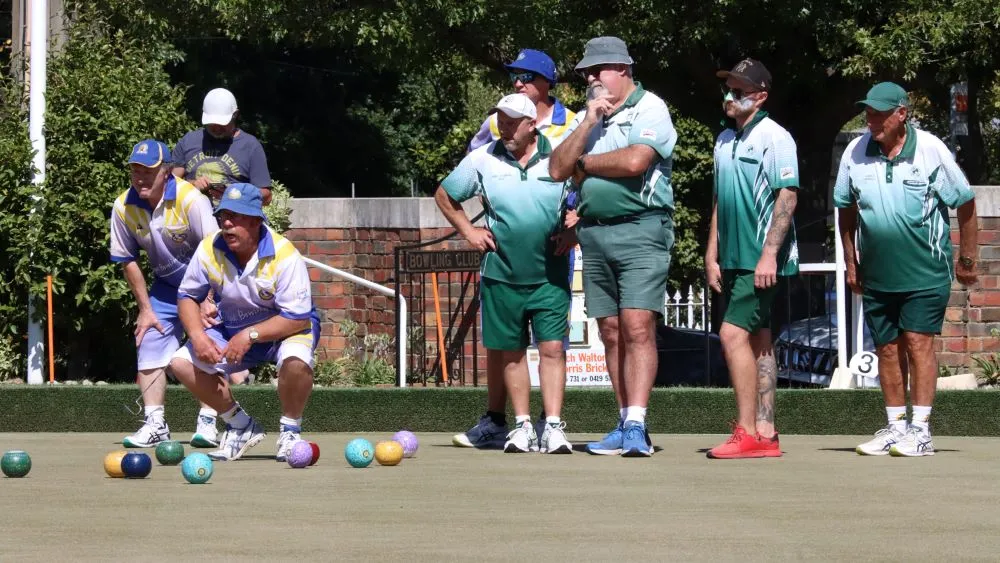 Photo: Championship Bowling, via static.timesnewsgroup.com.au
The suburban bowling alley became a kind of community anchor. It was accessible, affordable, and required no athletic background to enjoy. A grandmother and a ten-year-old could compete in the same game without either feeling embarrassed. That democratic quality — the sense that everyone gets a fair shot — fit perfectly into postwar America's self-image.
League bowling, in particular, became a social institution. Factories sponsored teams. Neighborhoods organized rivalries. The bowling shirt, once a purely functional garment, became a recognizable slice of American working-class identity.
The Game That Keeps Reinventing Itself
Bowling's popularity peaked in the 1970s before declining steadily through the 1980s and 90s as suburban entertainment options multiplied. Many classic alleys closed. The sport's cultural cachet faded.
But the industry adapted again. The rise of "boutique bowling" — upscale venues with craft cocktails, gourmet food, and mood lighting — has introduced the sport to a new generation that might have dismissed the traditional alley as hopelessly dated. Chains like Bowlero and Lucky Strike repackaged the experience as a night out rather than a family outing, finding yet another identity for a sport that has never been content to stay in one lane.
From colonial gambling dens to the subject of a legislative ban, from a tenth-pin loophole to a postwar suburban staple, bowling has survived by constantly reshaping what it means to different generations of Americans. The strikes and spares haven't changed much. Everything around them has — over and over again.