The Sock Drawer Problem Was Invented in a Boardroom
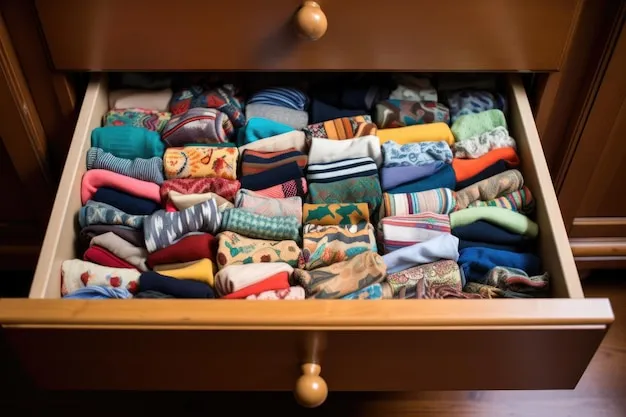
Photo: messy sock drawer colorful mismatched socks closeup, via img.freepik.com
Open your sock drawer. Go ahead, picture it. There are probably a few pairs that match perfectly, a couple that are close but not quite, and at least one lone sock that has been sitting there for three months waiting for a partner that is never coming back. You've made peace with this. Everyone has.
But here's the thing: the chaos in your sock drawer isn't the result of careless laundering or bad luck. It's the predictable outcome of a packaging decision made by sock manufacturers in the mid-twentieth century — a decision that was never about convenience and was always about selling more socks.
Socks Used to Be a One-at-a-Time Business
For most of human history, socks were made individually. If you needed socks, you bought socks — one at a time, from a dry goods store, measured against your foot, sometimes knitted to order. The idea that socks came in predetermined pairs was not a natural truth about the universe. It was a sales format waiting to be invented.
Before the twentieth century, hosiery was a relatively specialized product. Wealthy households had stockings made to measure. Working-class Americans made do with whatever was available, often repairing and re-darning socks until they were more patch than original fabric. The disposable sock — the cheap, mass-produced tube of cotton you pull on without thinking — is a twentieth-century invention, and it arrived alongside the retail packaging decisions that would eventually fill your drawer with orphans.
The 1950s and the Art of the Unnecessary Bundle
After World War II, American manufacturing was running hot. Textile mills that had been producing military gear pivoted aggressively to consumer goods, and the sock market became intensely competitive. Dozens of brands were fighting for shelf space in the same department stores and five-and-dime shops, and the margins on individual socks were thin.
The solution that emerged — gradually, and not from any single company — was bundling. Sell two socks as a unit. Then three pairs. Then six. The packaging made the purchase feel like a value proposition: you were getting more for your money. What it actually did was increase the minimum spend, move more volume per transaction, and make the individual sock economically invisible.
By the late 1950s and into the 1960s, the paired sock had become so standard that buying a single sock felt strange — almost like asking for half a sandwich. The format had calcified into convention before most consumers had time to notice it was a format at all.
The Matching Problem Is Baked In
Here's the structural problem that the bundled sock creates: socks wear out at different rates. The heel goes first on one, the toe on another. You lose one in the laundry. You buy a new pack and the shade of black is slightly different from the last pack. Over time, your drawer becomes a graveyard of near-matches and almost-pairs.
This is not a design flaw. From the manufacturer's perspective, it's closer to a feature. The faster your sock inventory degrades into mismatched chaos, the sooner you buy another six-pack. The paired format ensures that a single lost sock renders another sock useless — doubling the effective waste rate compared to a system where socks were interchangeable individual units.
Some manufacturers did experiment with selling socks in odd numbers — three identical socks, for instance, so that losing one still left you with a functional pair. A few specialty brands still do this. But it never caught on at scale, partly because the three-sock pack is harder to display, and partly because consumers had already been trained to think in pairs.
Why Nobody Fixed It
The obvious fix — selling socks as uniform, interchangeable units rather than matched pairs — has been proposed more than once. In theory, if every sock in your drawer were identical, the matching problem would disappear entirely. Some brands have built their entire identity around this idea, marketing the "no match needed" sock as a lifestyle solution.
And yet the paired sock persists, dominates, and fills the shelves of every Target and Walmart in the country. Part of this is inertia: the supply chain, the packaging machinery, the retail display systems — all of it is built around the pair. Changing it would require coordinated effort across an entire industry that has no particular incentive to coordinate.
But there's also a psychological dimension. Consumers have been living with paired socks for so long that the matching process — however mildly annoying — feels normal. The mismatched drawer isn't experienced as a systemic failure. It's experienced as a personal one. You lost the sock. You should have been more careful. You need to buy more.
The Drawer You Never Questioned
The next time you're standing in front of your sock drawer at 7 a.m., holding two socks that are almost the same shade of gray, remember that this moment was engineered. Not maliciously, and not by any single villain, but by the accumulated logic of postwar retail: sell more, move faster, make the unit of purchase larger than the unit of use.
The sock drawer problem is one of the most mundane examples of how packaging decisions shape behavior at scale. Nobody sat in a boardroom and said, "Let's make sure America's sock drawers are always slightly chaotic." But nobody had to. The incentives did the work on their own.
You'll probably just buy another six-pack.