The Invisible Audience That Taught You What's Funny: Inside the Strange Engineering of the Laugh Track
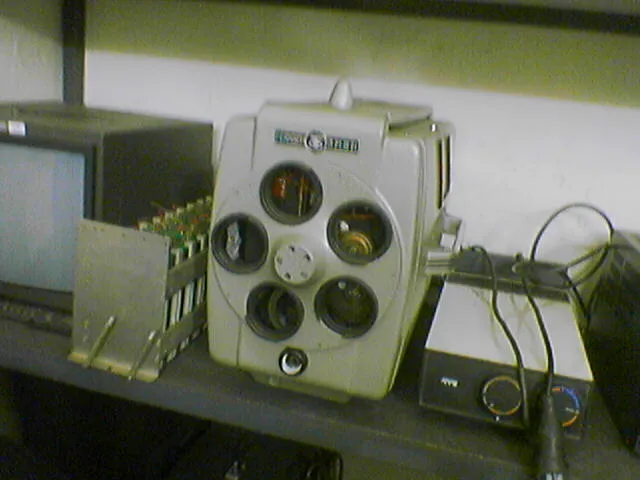
Photo: Horst-Mirjam von Linotype, CC BY-SA 2.0, via Wikimedia Commons
Sit down with any episode of a classic American sitcom — Seinfeld, Friends, The Big Bang Theory — and you'll notice something so familiar it's nearly invisible. After every joke, sometimes after lines that aren't really jokes at all, there's laughter. Warm, appreciative, perfectly timed. An audience that always finds everything funnier than you do.
That audience is fake. And the device that created it reshaped American comedy from the ground up.
It Started With Radio
Before television existed, American entertainment lived in radio — and radio had a problem. Comedy that worked in a theater, with a live crowd feeding energy back to the performers, felt flat when broadcast into a living room. The timing was off. Silence where laughter should have been made jokes land wrong. Audiences at home weren't sure when they were supposed to respond.
The solution was simple: bring a live studio audience in and broadcast their reactions alongside the performance. Shows like The Jack Benny Program and The Fred Allen Show used live crowds not just for atmosphere but as a kind of audio cue — a signal to listeners that this is the funny part.
It worked. Laughter is one of the most socially contagious sounds humans produce. Research on the phenomenon consistently shows that people are significantly more likely to laugh at something when they hear others laughing at the same time — even when they know the other people aren't real. The radio producers may not have known the neuroscience, but they understood the effect.
When television arrived in the late 1940s, it inherited the live studio audience as standard equipment.
The Man With the Machine
Here's where the story gets strange.
As television production scaled up in the early 1950s, live studio audiences became logistically complicated. Not every show could accommodate a crowd. Filmed comedies shot on location obviously couldn't. And even shows that did use live audiences sometimes had takes that were unusable — wrong camera angle, flubbed line — but needed to be cut in without the accompanying crowd reaction.
A CBS sound engineer named Charles Douglass saw the problem and built a solution. In 1953, he developed a device he called the Laff Box — a modified organ-like machine that stored recordings of real audience laughter on tape loops and allowed an operator to trigger different types of reactions in real time. A chuckle here. A big laugh there. Applause on cue.
The recordings Douglass used came primarily from real broadcasts — captured live audience reactions from radio shows and early television tapings. Some researchers have noted, with a certain dark humor, that a portion of those original recordings came from audiences watching comedians who have been dead for decades. The laughter you hear on reruns of 1970s sitcoms may include people who were already gone by the time you were born.
Douglass kept his machine and its operation a closely guarded trade secret. He hired himself out to networks as a contractor, personally operating the Laff Box on dozens of productions. For years, he was essentially a one-man industry — the invisible architect of American television comedy.
The Networks Realize What They Have
Producers quickly figured out that the Laff Box wasn't just a technical fix. It was a creative lever.
Adding laughter to a weak joke made it land better. Adding more laughter made the same joke seem funnier still. Removing laughter from a strong moment made audiences uncertain. The audio environment was shaping perception of the content itself — not just amplifying reactions, but manufacturing them.
By the late 1950s, canned laughter had become standard on virtually every American sitcom. Shows were routinely sweetened in post-production, with Douglass or one of the small number of technicians who had learned the craft sitting at a mixing board and essentially scoring the comedy the way a film composer scores drama.
The effect on what got made was profound. Writers and producers began calibrating jokes not to what a real audience might find funny, but to what sounded funny when amplified by a canned crowd. Broad, obvious setups that telegraphed the punchline worked better with the Laff Box than subtle or understated material. The machine had taste, in a sense — and it was shaping the comedy that got greenlit.
The Psychology Behind Why It Works
Social psychologist Robert Cialdini, in his landmark 1984 book Influence, used canned laughter as a textbook example of what he called social proof — the human tendency to look to others' behavior as a guide for our own. When we hear laughter, our brains interpret it as evidence that something is funny. The response is largely automatic, happening below the level of conscious evaluation.
Studies conducted throughout the 1970s and 80s consistently found that subjects rated jokes as funnier when accompanied by a laugh track — even when they were explicitly told the laughter was artificial. Knowing the manipulation was happening didn't reliably neutralize it. The brain processed the audio cue faster than the rational mind could override it.
Television producers were running one of the most effective mass psychology experiments in history, and most viewers had no idea.
When the Laugh Track Fell Out of Fashion
By the 1990s, a new generation of comedy writers had started pushing back. The Simpsons, which premiered in 1989, launched without a laugh track and became enormously influential. Seinfeld used a live studio audience but resisted heavy sweetening. Arrested Development, debuting in 2003, made the absence of canned laughter part of its identity — a signal to viewers that the show trusted them to find it funny on their own.
Streaming accelerated the shift. Without the network broadcast model — where broad appeal across a mass simultaneous audience mattered enormously — shows could afford to be drier, stranger, less signposted. The laugh track began to feel not just unnecessary but vaguely condescending.
And yet it never disappeared. Multi-camera sitcoms still use live audiences and sweetening. Comfort-viewing staples still lean on the warm wash of crowd laughter as part of their appeal. For many viewers, the laugh track isn't manipulation — it's atmosphere. It makes the living room feel less empty.
The Sound That Shaped a Sense of Humor
Charles Douglass retired in the 1990s. He rarely gave interviews and never fully disclosed the contents of his Laff Box recordings. He died in 2003, taking some of the specifics with him.
But his invention is still running. Every time you find yourself smiling at a joke you wouldn't have laughed at in silence, the ghost of that machine is still working. You were taught what's funny, in part, by a modified organ in a sound booth operated by one man at CBS.
The audience in your head has been there a long time. It just wasn't yours to begin with.