The Cereal Box Lie That Turned Americans Into Food Paranoids
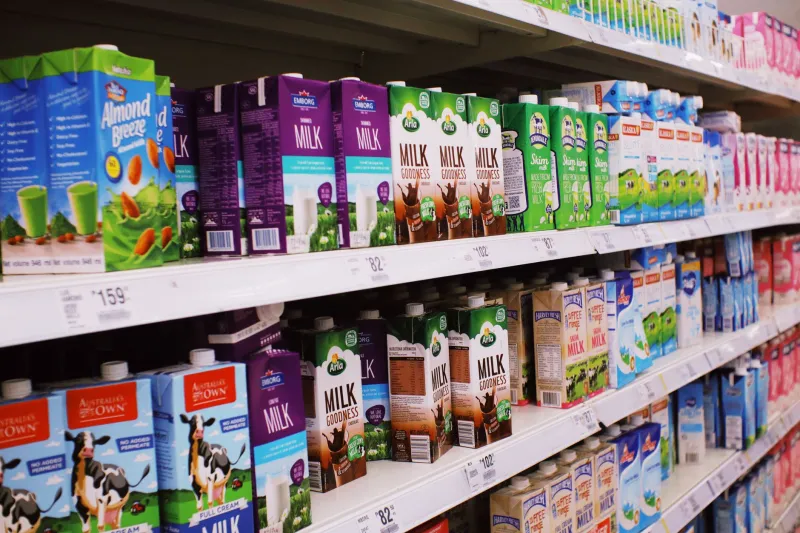
Somewhere in your refrigerator right now, there is probably a container of something you're not entirely sure about. Maybe it's yogurt. Maybe it's shredded cheese. Maybe it's the milk you bought four days ago. You'll open it, look at the date printed on the side, and make a decision based almost entirely on those numbers — even though those numbers were never designed to tell you whether the food is safe.
They were designed to move product off shelves faster.
This is the story of how a voluntary marketing tool invented by the cereal industry quietly rewired the way Americans think about food safety, and how that rewiring now costs the country roughly $160 billion in wasted food every single year.
Before the Dates, There Was Just Food
For most of American history, people determined whether food was edible the same way humans had for thousands of years: they looked at it, smelled it, and tasted it. These methods aren't glamorous, but they're remarkably effective. Spoiled food announces itself. It smells wrong, looks wrong, or tastes wrong. The human nose, in particular, is extraordinarily good at detecting microbial activity in food — far better, as it turns out, than a printed date on a cardboard box.
Before modern refrigeration and national food distribution, food was mostly local and consumed quickly. A farmer knew when his eggs were laid. A butcher knew when the meat arrived. The concept of a standardized date printed by a manufacturer in another state would have made no sense, because the supply chain that required such a thing didn't exist yet.
That changed dramatically after World War II. The rise of supermarkets, national food brands, and refrigerated trucking meant that food was now traveling hundreds of miles before it reached consumers. A box of cereal manufactured in Battle Creek, Michigan might sit in a warehouse, then a distribution center, then a store stockroom, then a shelf — for weeks before anyone bought it. The question of freshness became genuinely complicated.
 Photo: Battle Creek, Michigan, via bcunlimited.org
Kellogg's Sees an Opportunity
In the late 1960s and early 1970s, a few large food manufacturers — cereal companies chief among them — began experimenting with date labels. The stated rationale was consumer transparency: let shoppers know how fresh the product is. But the business rationale was considerably more direct.
If a box of cereal has a "best by" date printed on it, grocery store managers can pull older stock from shelves and replace it with newer product. That means faster inventory turnover, which means more frequent orders from manufacturers, which means more revenue. The date label wasn't primarily a consumer protection measure. It was a supply chain management tool that happened to be visible to consumers.
The dairy industry joined in quickly, recognizing that date labels could drive similar behavior among shoppers — people who might have bought milk and used it over two weeks would now feel compelled to replace it sooner, because the number on the carton told them to.
Crucially, none of this was regulated. The federal government had no standard definition for what "sell by," "best by," "use by," or "expires on" actually meant. Different manufacturers used different terms to mean different things. Some dates referred to peak quality. Some referred to the last date a retailer should sell the product. Some were calculated from the date of manufacture. Some were calculated from the date of packaging. There was no uniform system, no scientific standard, and no government body setting the rules.
There still isn't, for most foods. The FDA regulates date labels on infant formula. Everything else is essentially voluntary.
How a Marketing Label Became a Safety Gospel
Here's where the psychology gets interesting. Once date labels became ubiquitous on packaging through the 1970s and 1980s, consumers began treating them as authoritative — as if the number on the package represented a precise scientific threshold between safe and unsafe food. The ambiguity of terms like "best by" disappeared in practice. People read them all as expiration dates in the most literal sense: the food is good until this date, and dangerous after it.
Food companies didn't correct this misunderstanding, because it was good for business. If consumers believed that food became unsafe on the printed date, they'd throw it away and buy more. The system created its own demand.
Public health messaging complicated things further. Genuine food safety crises — E. coli outbreaks, salmonella contamination, listeria recalls — received significant media coverage through the 1990s and 2000s, understandably heightening consumer anxiety about food safety. That anxiety got attached to date labels, even though most of those crises had nothing to do with food being old. They involved contamination during processing, which can affect food long before any printed date.
What the Numbers Actually Mean
Food scientists are remarkably consistent on this point: most "best by" and "sell by" dates are quality indicators, not safety indicators. They tell you when a manufacturer believes the product will taste best, not when it will make you sick.
Milk is typically safe to drink for a week past its sell-by date if it's been properly refrigerated. Dry pasta can last years past its best-by date. Canned goods remain safe virtually indefinitely if the can is undamaged. Eggs are generally fine three to five weeks past the pack date. Hard cheeses can simply have mold cut off and be eaten safely.
The USDA and FDA have both published guidance making these points clearly. Food scientists, nutritionists, and public health researchers have written extensively about the gap between date-label anxiety and actual food safety risk. A landmark 2013 report from the Natural Resources Defense Council and Harvard Law School concluded that date label confusion was the single largest driver of household food waste in the United States.
 Photo: Harvard Law School, via hls.harvard.edu
 Photo: Natural Resources Defense Council, via authentic.org
None of it has made much difference. Americans keep throwing away billions of dollars in perfectly good food because a number on a package told them to.
The $160 Billion Misunderstanding
The scale of the waste is genuinely staggering. Estimates vary, but most analyses put American household food waste somewhere between $1,300 and $2,200 per family per year. Nationally, that adds up to roughly 30 to 40 percent of the entire food supply being discarded — a significant portion of which is food that was safe to eat.
Some states have moved to standardize date label language. California passed legislation in 2017 pushing toward uniform "best if used by" and "use by" labeling. A handful of federal proposals have circulated in Congress over the years, though none have passed into law as of this writing.
The food industry, predictably, has mixed feelings about reform. Clearer labeling might reduce waste, but it might also reduce the impulse purchasing that date-driven anxiety currently encourages.
The Next Time You Sniff the Milk
The date printed on your food package isn't lying to you, exactly. The cereal probably does taste best before that date. The milk probably is at its freshest peak a few days earlier. But the number was never meant to be a safety deadline — it was meant to be a freshness benchmark, designed as much for retailers as for you.
Your nose, your eyes, and your common sense are still the best tools you have. They've been working reliably for a very long time — long before anyone thought to print a date on a box.