The Ice Man Who Froze, Thawed, and Completely Transformed What Americans Drink
Order a beer almost anywhere in America and it arrives cold. Not cool, not cellar-temperature, not slightly chilled — genuinely, assertively cold, ideally with frost on the glass. It's so standard that a warm beer in the United States reads as a failure, a sign that something has gone wrong in the kitchen or behind the bar.
In most of Europe, that same beer would arrive at a temperature Americans would send back. In parts of Asia and Latin America, the expectation varies wildly. The American obsession with ice-cold drinks is, by global standards, a cultural quirk.
And it traces almost entirely to one man, one ridiculous business idea, and a series of decades-long bets that almost everyone around him was certain he would lose.
The Laughingstock of Boston Harbor
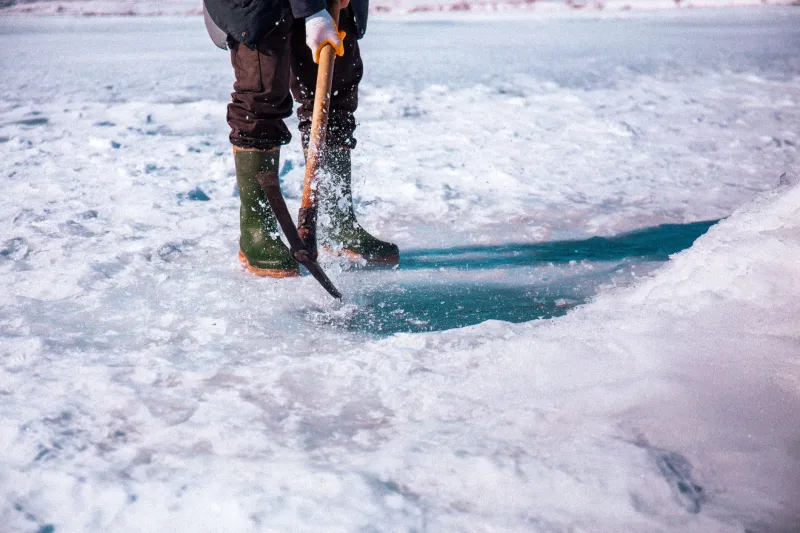
Frederic Tudor was twenty-two years old in 1806 when he decided to harvest ice from a pond on his family's Massachusetts estate and ship it to the Caribbean. The idea was simple in concept and nearly impossible in execution: cut blocks of frozen water in winter, pack them in insulated ships, and sell them to tropical markets that had never experienced refrigeration.
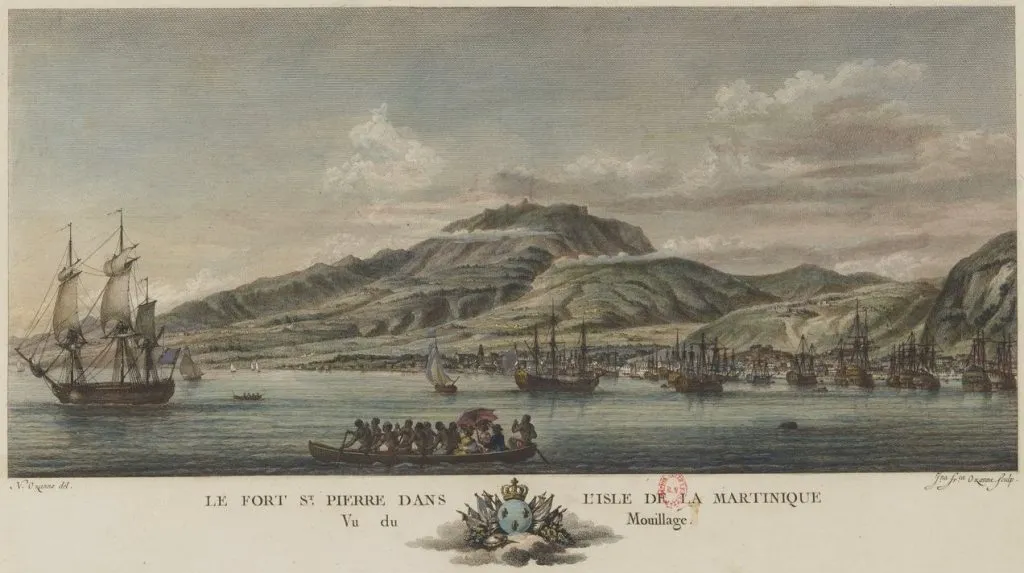 Photo: Frederic Tudor, via investoramnesia.com
Boston's merchant community found this hilarious. The Boston Gazette noted that no one in their right mind would try to sell ice to the tropics, and predicted swift financial ruin. They were, in the short term, completely correct. Tudor's first shipment to Martinique in 1806 arrived with no pre-arranged buyers, no storage facilities, and melted into a significant loss before he could sell a pound of it.
He went to debtor's prison. Twice.
He kept going anyway.
The Infrastructure Problem Nobody Else Saw
What separated Tudor from a simple eccentric was his ability to identify the real obstacle and attack it systematically. The problem wasn't that people didn't want cold things — it was that they had no idea what to do with ice once they had it, and no infrastructure to store or use it.
So Tudor built the infrastructure himself.
In Havana, he constructed the first ice storage house in the tropics, an insulated building that could hold harvested ice for weeks without significant melt. He negotiated exclusive contracts with local hotels and bars, essentially creating captive customers before he'd sold them anything. Then he introduced ice to bartenders and café owners who had never worked with it, showing them how to make cold drinks and cold desserts that their customers had never tasted.
The strategy worked almost exactly as he planned. Once Havana residents experienced cold drinks in a hot climate, demand became self-sustaining. Tudor had manufactured a luxury and then turned it into a necessity.
He ran the same playbook in Charleston, Savannah, New Orleans, and eventually Calcutta. Each new market required the same patient, expensive process of building storage, educating buyers, and creating the consumer habit from scratch. By the 1820s, Tudor was no longer a laughingstock. He was becoming wealthy, and his operation was scaling.
The Funeral Parlor Connection
Back home in the northern states, Tudor's ice business was growing for a very different reason. Long before cold drinks became a consumer product, ice had a practical and unglamorous market: the preservation of bodies.
Funeral parlors in the mid-1800s relied on ice as the primary means of slowing decomposition before burial. Meat packers and fishmongers used it to extend the shelf life of perishables. Hospitals used it to manage fevers. These were the anchor customers of the early American ice trade — not thirsty consumers, but industries with urgent, non-negotiable preservation needs.
This unglamorous foundation gave the ice industry the financial stability to scale up its harvesting and distribution operations, which in turn made ice cheap enough to eventually reach domestic consumers and the brewing industry.
The connection between the mortuary trade and the cold beer in your refrigerator is not a metaphor. It's a supply chain.
How the Brewers Got Cold
American brewing in the early nineteenth century was dominated by ale, which ferments at room temperature and doesn't require refrigeration to produce. Lager — the crisp, cold-fermented style that now accounts for the overwhelming majority of beer sold in America — requires consistently cold temperatures throughout the brewing process. Without reliable ice, you simply couldn't make it at scale in most of the country.
German immigrants arriving in the 1840s and 1850s brought lager-brewing traditions with them, and they found in Tudor's expanding ice network exactly what they needed. Breweries in Milwaukee, St. Louis, and Cincinnati began building lagering caves and ice-cooled cellars that allowed them to produce the clean, consistent lager that American drinkers quickly preferred.
The names that came out of that era — Pabst, Schlitz, Anheuser-Busch — built their empires on cold fermentation. And cold fermentation was built on ice.
By the time mechanical refrigeration began displacing natural ice in the late 1800s, the expectation was already baked into American drinking culture: beer was a cold product. Refrigerated railcars extended that expectation nationally. Home refrigerators, which became common in American households through the 1920s and 1930s, locked it in permanently.
The Standard That Stuck
Tudor died in 1864 having built what was, for a period, one of the largest commodity businesses in the world. At its peak, the American natural ice industry employed tens of thousands of workers and exported to every inhabited continent. It was one of the United States' most significant export industries — a fact that has been almost entirely forgotten.
Mechanical refrigeration eventually killed the natural ice trade, but it inherited all of Tudor's cultural work. The infrastructure he built, the habits he created, the consumer expectation he spent thirty years manufacturing — all of it transferred seamlessly to the electric age.
The American insistence on ice-cold beer is sometimes treated as a quirk or a preference. It's actually the residue of one man's relentless, repeatedly failed, ultimately triumphant campaign to convince an entire nation that cold was worth paying for.
He started with a frozen pond and a ship. He ended up changing what you order at a bar.
Not bad for someone the newspapers once called a fool.