Three Notes, One Mistake: The Accidental Chime That America Never Stopped Hearing
Close your eyes and picture this: you're in a hotel lobby. An elevator arrives. Before the doors open, three ascending tones ring out — clean, pleasant, utterly familiar. Or you're watching television and a peacock logo fills the screen. Three notes. Or you're at an airport gate and an announcement is about to begin. Three notes again.
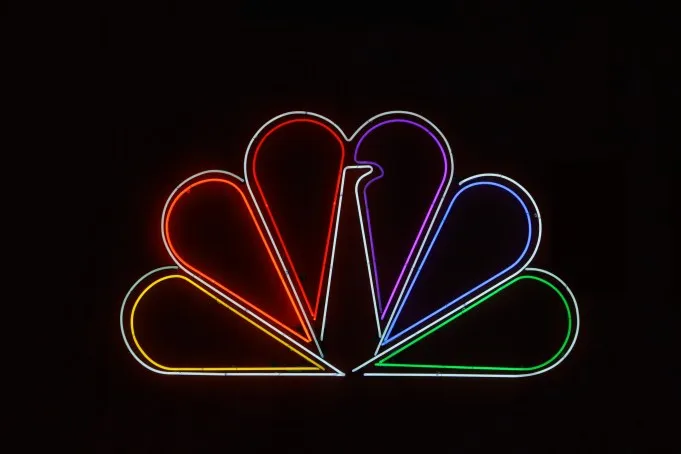 Photo: peacock logo, via deadline.com
You've heard this sound thousands of times. You've probably never once wondered where it came from. That's exactly what makes its origin so interesting — because it wasn't designed. It was improvised, in a panic, during a live radio broadcast, and it worked so well that an entire country quietly agreed to adopt it.
Live Radio and the Problem of Dead Air
To understand how this happened, you need to appreciate what live radio broadcasting was like in the 1920s. There were no editing tools, no delay buffers, no second chances. Whatever went out over the airwaves was permanent and immediate, heard simultaneously by everyone tuned in. A mistake on a live broadcast wasn't an embarrassment you could quietly fix in post-production — it was a public event.
NBC launched in 1926 as the first major American broadcasting network, stitching together affiliate stations across the country into a coordinated national signal. The ambition was enormous. The execution, in those early years, was frequently chaotic. Cues were missed. Segments ran long or short. Guests arrived late or not at all. The people operating the technical side of these broadcasts were essentially making the rules up as they went.
One recurring problem was transitions. When a program ended or a break occurred, there needed to be something to fill the gap — a signal to listeners that what they were hearing was intentional and that more was coming. Silence, in the language of radio, meant something had gone wrong.
The Chime That Saved the Moment
The specific origin story of the NBC chime has been documented and debated for decades, but the most widely cited account places it at NBC's studios in the late 1920s. A stagehand — or by some accounts a page or doorman — was responsible for manually striking a set of chimes to signal the top of the hour. On one particular broadcast, the cue was missed. Realizing the error mid-transition, the operator improvised, striking three available notes in quick succession: G, E, and C.
The notes happened to form a pleasant, ascending musical phrase — not a melody exactly, but something that sounded deliberate and authoritative. To the listening audience, it read as a professional flourish rather than a scramble. NBC's producers, hearing the result, apparently recognized that they'd accidentally landed on something useful.
The three-note sequence was formalized and NBC actually filed for a trademark on the chime in 1950, making it one of the earliest examples of a sound being legally protected as a brand identifier. The trademark was eventually challenged and partially overturned on the grounds that the sequence was too simple to qualify for exclusive ownership — but by that point, the chime had already escaped into the wider culture.
How Three Notes Became a Universal Signal
What happened next is a story about imitation doing the work that no single decision could. The NBC chime became so familiar to American radio and early television audiences that the ascending three-note pattern began to feel like an inherently authoritative sound — a sonic signal that something important was about to happen or that a transition was underway.
Hotel operators noticed. The hospitality industry had its own need for attention signals — ways to summon guests to the front desk, announce elevator arrivals, or alert a dining room that a table was ready. The three-note chime, already embedded in millions of Americans' daily listening habits, was a natural fit. It was pleasant enough not to startle, distinctive enough to cut through ambient noise, and — crucially — it already carried an association with professional competence and reliability.
Airports adopted similar logic as commercial aviation expanded through the 1950s and 60s. Gate announcements needed a pre-tone that would pull passengers' attention without causing alarm. The ascending chime, by then thoroughly conditioned into the American public, was the obvious answer.
Elevator manufacturers incorporated chimes into their designs partly for practical reasons — auditory signals help people with visual impairments navigate buildings — but the specific choice of a pleasant ascending tone over a buzzer or bell reflects the same cultural inheritance. The sound that works is the sound people already know.
The Science of Why It Works
Audio researchers call this kind of learned response a "conditioned auditory cue." Through repetition, the brain begins to associate a specific sound with a specific outcome — in this case, "pay attention, something is about to happen." The NBC chime succeeded partly because it was the right sound in the right moment, but it became indispensable because it was repeated often enough to become instinctual.
This is actually a well-documented phenomenon in sound design. The most effective alert tones are ones that are distinctive without being jarring, and that carry enough cultural repetition to feel immediately meaningful. The NBC chime hit all of those marks — not because someone engineered it to, but because an accident produced something that happened to work, and the culture did the rest.
The Sound You Never Noticed Shaping You
There's something quietly remarkable about the idea that one of the most universally recognized sounds in American public life traces back to a single moment of human error. No focus groups. No design briefs. No branding consultants. Just someone hitting the wrong cue, improvising three notes, and producing something so effective that it spread from a radio studio in New York to every hotel corridor, airport terminal, and television network in the country.
Next time you hear those three ascending tones — wherever you happen to be — you're hearing the echo of that scramble. A mistake that became a standard. An accident that became a language everyone understands without ever being taught.