Before 1883, Every American City Kept Its Own Time — The Railroads Ended That Forever
Check your phone right now. The time it shows — whatever it says — is a number that you share with everyone in your time zone. Your neighbor has it. The coffee shop down the street has it. The hospital, the school, the courthouse, the airport — all running on the same agreed-upon hour and minute. This shared sense of "what time it is" feels like a natural feature of reality, like gravity or weather.
It isn't. It's a corporate invention, roughly 140 years old, that Americans initially greeted with fury.
When Every City Kept Its Own Clock
For most of human history, local time was solar time. Noon was when the sun reached its highest point in the sky above your specific location — and because the earth is round, that moment arrived at slightly different clock-times depending on where you stood. Boston's solar noon and Philadelphia's solar noon were about twelve minutes apart. Cincinnati ran about thirty-eight minutes behind New York. Chicago and Detroit differed by roughly twenty minutes.
For communities that rarely traveled beyond the next county, this was completely irrelevant. You set your clock by the local church bell or the town hall clock, which was itself set by a local official using a sundial or a transit instrument. Everyone within earshot agreed on the time. Nobody needed to agree with anyone farther away.
By 1850, the United States had over 300 distinct local times operating simultaneously across the country. This was not considered a problem. It was simply how time worked.
The Railroads Arrived and Immediately Broke Everything
The first American railroads in the 1830s and 1840s were short, regional lines that didn't create much scheduling complexity. But as the network grew — explosively, through the 1850s and 1860s — the operational reality of running trains on fixed schedules across hundreds of miles of track started colliding with the patchwork of local times in ways that were confusing at best and lethal at worst.
Consider what a railroad timetable actually required. A train leaving New York at 8:00 a.m. bound for Chicago would pass through dozens of cities, each running on its own local solar time. To publish an accurate schedule, railroads had to account for every local time offset along the route. A single journey might require passengers to adjust their watches five or six times.
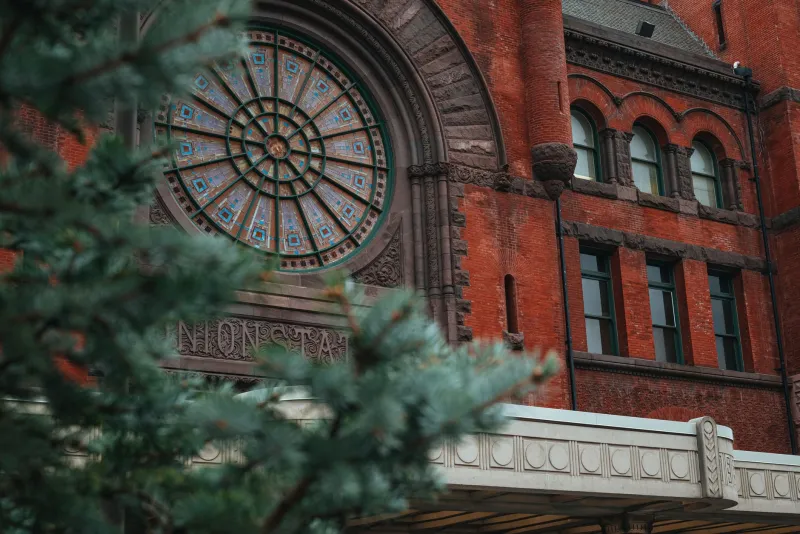
Some railroads solved this by simply running on their own company time — setting all their clocks to the time at their headquarters city and ignoring local variations entirely. The Pennsylvania Railroad ran on Philadelphia time. The New York Central ran on New York time. The result was that a single train station might display three or four different clocks, each showing a different time, each correct according to a different railroad's operating standard.
 Photo: Pennsylvania Railroad, via img-s-msn-com.akamaized.net
This wasn't just inconvenient. In an era before radio communication, when train dispatchers coordinated movements by telegraph and paper timetables, conflicting time standards contributed to collisions. Trains on shared or intersecting tracks, operating on different time references, could end up in the same place at what both conductors believed was a perfectly safe moment.
One Man's Solution That Nobody Asked For
The person most responsible for solving this mess was not a government official, a scientist, or a philosopher. He was a railroad engineer and amateur astronomer from Connecticut named Charles Ferdinand Dowd.
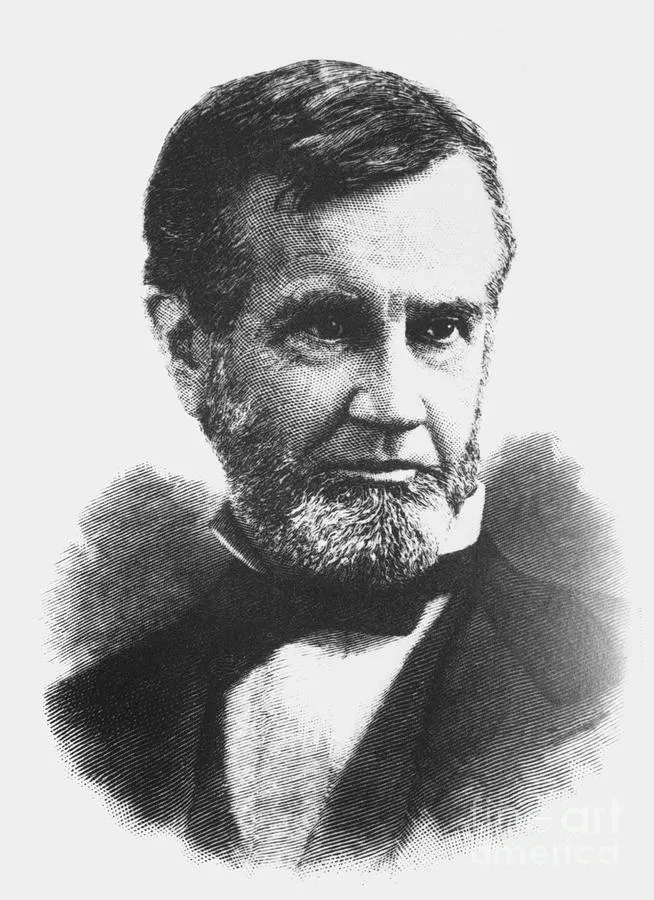 Photo: Charles Ferdinand Dowd, via images.fineartamerica.com
In 1869, Dowd proposed something that sounds obvious in retrospect: divide the continental United States into four time zones, each one hour apart, aligned roughly along lines of longitude. Every railroad — and every city — within a given zone would run on the same standard time. The confusion of hundreds of competing local clocks would be replaced by four clean, consistent reference points.
Dowd spent years shopping this idea to railroad executives, government officials, and scientific organizations. He published pamphlets. He wrote letters. He revised his proposal repeatedly to make it more palatable. For over a decade, he was largely ignored.
The scientific community had its own competing proposals. The federal government showed minimal interest — Congress never passed legislation on the subject. Dowd's specific zone boundaries were eventually modified by others, and he received little official credit during his lifetime. (He died in 1904, struck by a train — a grim irony that history has not let go of.)
But the core idea was sound, and eventually the people who most needed it to work decided to make it happen without waiting for permission.
November 18, 1883: The Day That Had Two Noons
On November 18, 1883 — a date that railroads called "The Day of Two Noons" — the major American railroad companies unilaterally adopted a four-zone standard time system across the country. At exactly noon in each new time zone, station clocks were reset. In some cities, this meant clocks jumped forward. In others, they were pushed back. In Chicago, clocks were set back nearly ten minutes. In Buffalo, they moved forward about four minutes.
This was not a government action. Congress had not voted on it. The president had not signed it. A consortium of private railroad corporations had simply decided to reorganize the country's relationship with time, and they had the logistical leverage to make it stick because they controlled the infrastructure that everyone depended on.
The backlash was immediate and sometimes theatrical.
Newspaper editorials accused the railroads of arrogance. Ministers in several cities preached that corporations had no right to override God's time — the natural solar time that the Almighty had built into the rotation of the earth. The mayor of Bangor, Maine, refused to change the city's official clocks. Pittsburgh resisted for years, maintaining local time for city functions while the railroads ran on standard time, creating a dual-clock situation that confused residents for over a decade.
The Indianapolis city council passed a resolution declaring standard time an affront to human liberty. Philosophers wrote essays about the spiritual implications of surrendering one's sense of time to a corporate timetable.
The Government Finally Caught Up — Thirty-Five Years Later
Despite the outrage, standard time worked. Train scheduling became dramatically simpler. Accidents caused by time confusion decreased. The traveling public — once they got used to it — found the system easier to navigate than the old patchwork of local clocks.
City by city, the official clocks fell into line. Not because Congress ordered it, but because the railroads had made standard time the practical reality, and civic institutions eventually followed.
The federal government didn't formally legalize standard time zones until the Standard Time Act of 1918 — thirty-five years after the railroads had already implemented them. Daylight saving time, attached to the same legislation, caused a second round of public outrage, but that's a separate argument.
The Hidden Architecture of Your Day
Every time you glance at a clock, coordinate a meeting, catch a flight, or set an alarm, you're operating inside a system that a group of railroad executives built without authorization in the autumn of 1883. The scientists who proposed it were ignored. The government that could have formalized it declined to act. The public that resisted it eventually stopped noticing.
Standard time is one of the most successful forced changes in American cultural history — not because it was popular, but because the alternative was chaos, and eventually everyone could see that. The railroads didn't ask permission to restructure how Americans experienced time. They just did it, and the country adapted.
Which is worth remembering the next time your alarm goes off at an hour that feels completely arbitrary. It is. Someone decided it a long time ago, and you've been living with it ever since.