The Dismissed Inventor Who Accidentally Trained 300 Million Americans to Wake Up on Command
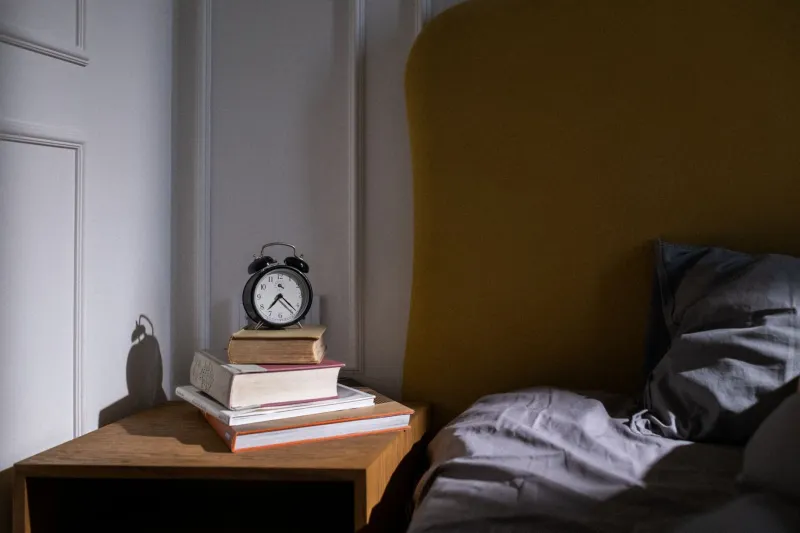
You probably groaned at it this morning. Maybe you hit snooze twice. You've done it so many times it barely registers as a conscious act. But that alarm clock sitting on your nightstand — or buzzing on your phone — is the product of a surprisingly long and contentious history involving monks, industrialists, railroad executives, and one stubborn New Hampshire clockmaker whose best idea got rejected before it changed everything.
It Started With Monks Who Needed to Pray in the Dark
The alarm clock's earliest ancestor had nothing to do with factory shifts or morning commutes. It was built for God.
In medieval European monasteries, monks were required to wake for prayer at fixed hours throughout the night — including before dawn. Missing these canonical hours wasn't just inconvenient; it was a spiritual failing. So monastery bell towers were fitted with mechanical weight-driven clocks that could trigger a bell at a pre-set hour, dragging sleeping brothers out of their beds and into the chapel.
These weren't personal devices. They were institutional ones — enormous, expensive, and entirely impractical for ordinary people. For centuries, most people simply woke with the sun, went to bed when it got dark, and organized their days around natural light. The idea that a machine might dictate when a person should open their eyes would have struck a medieval farmer as both bizarre and faintly threatening.
That changed when the factories arrived.
The Factory Whistle Wasn't Enough
The Industrial Revolution didn't just transform what Americans made — it transformed when they existed. For the first time, work happened on a fixed schedule regardless of season, weather, or daylight. Factory owners needed workers at their stations at a specific hour, and tardiness had real economic consequences. The factory whistle became the great auditory enforcer of early industrial America, blasting across mill towns at five or six in the morning to drag the workforce into consciousness.
But the whistle had a problem: it only worked if you were already awake enough to hear it. Workers who lived farther away, or who slept heavily, or who simply needed more reliable nudging, started looking for something more personal.
Small mechanical alarm clocks existed by the mid-1800s, but they were expensive, unreliable, and largely a luxury item. Most working-class Americans relied on a profession that has since completely vanished — the knocker-upper. Borrowed from British industrial culture, knocker-uppers were hired to walk the streets before dawn and physically tap on bedroom windows with long poles until their clients stirred. It was a real job. People paid for it. And it worked, right up until the moment personal alarm clocks got cheap enough to replace it.
The Railroads Turned Punctuality Into a National Religion
If factories made Americans care about time, the railroads made them obsessed with it.
By the 1850s and 1860s, the American rail network had exploded across the country, and with it came a scheduling problem that nobody had anticipated. Trains ran on timetables. Timetables required stations to agree on what time it actually was. And in an era before standardized time zones — when every city ran on its own local solar time — this was a logistical nightmare that occasionally turned deadly, as trains on shared tracks operated on mismatched clocks.
The railroad industry's eventual solution to that chaos (more on that in another story) had a cultural side effect: it made punctuality a civic virtue. Being on time wasn't just polite anymore. It was modern. It was American. Missing a train because you overslept wasn't a personal failing — it was a failure to participate in the national project of progress.
Alarm clock sales climbed steadily through the latter half of the 19th century as this cultural pressure mounted. But the devices were still temperamental, often loud in the wrong ways, and mechanically inconsistent.
The Patent Nobody Wanted
In 1876, a clockmaker named Seth E. Thomas — working within the broader Connecticut clockmaking tradition that had already made New England the center of American timekeeping — was refining designs for a more reliable, affordable bedside alarm mechanism. Around the same time, a lesser-known inventor named Levi Hutchins had already built a personal alarm clock for himself back in 1787, though he never patented it and never tried to sell it. He just wanted to wake up at four in the morning. That was it. No commercial ambition whatsoever.
 Photo: Levi Hutchins, via i.pinimg.com
The design that eventually became the standard American bedside clock — the twin-bell, hammer-strike model that sat on a flat base and could be wound by hand — went through multiple iterations and patent disputes before settling into the form that mass manufacturers adopted in the late 19th century. Several of these early patent applications were dismissed or superseded. Designs that seemed clunky or over-engineered at the time of submission quietly became industry standard once manufacturing costs dropped enough to make them viable for working-class households.
By the 1890s, companies like Westclox were producing alarm clocks affordable enough for ordinary American families. The famous Big Ben clock — launched by Westclox in 1909 — became one of the best-selling consumer products in the country and remained so for decades.
 Photo: Big Ben, via i.pinimg.com
How the Alarm Clock Rewired American Sleep
Here's where it gets genuinely strange. The alarm clock didn't just respond to American work culture — it helped create it.
Once reliable alarm clocks became cheap and widespread, employers felt more comfortable setting earlier start times, knowing workers had a tool to meet them. Sleep schedules that had previously been loosely tied to natural light patterns became fixed to clock faces instead. The idea of a "morning person" versus a "night owl" — a distinction that feels biological but is partly cultural — became meaningful only once the alarm clock made it possible to override your body's natural rhythms on a daily basis.
Sleep researchers today point out that the average American gets significantly less sleep than people did before industrialization, and that artificial wake times enforced by alarms are a major contributing factor. We built a device to serve the factory schedule, and the factory schedule quietly restructured human biology.
The Little Machine That Still Runs Your Morning
The twin-bell mechanical clock gave way to electric models in the mid-20th century, then to clock radios, then to digital displays, and now to the smartphone alarm that most Americans use today. The form has changed completely. The function hasn't moved an inch.
Every morning, across every time zone in the country, hundreds of millions of Americans are pulled out of sleep at a predetermined hour by a descendant of a medieval monastery bell. The monks wanted to pray. The factory owners wanted productivity. The railroad barons wanted punctuality. And somewhere in between all of that institutional need, a few dismissed inventors and cost-cutting manufacturers quietly built the device that still controls how your day begins — whether you like it or not.