From the Graveside to the Grocery Store: How Flowers Escaped the Funeral Industry
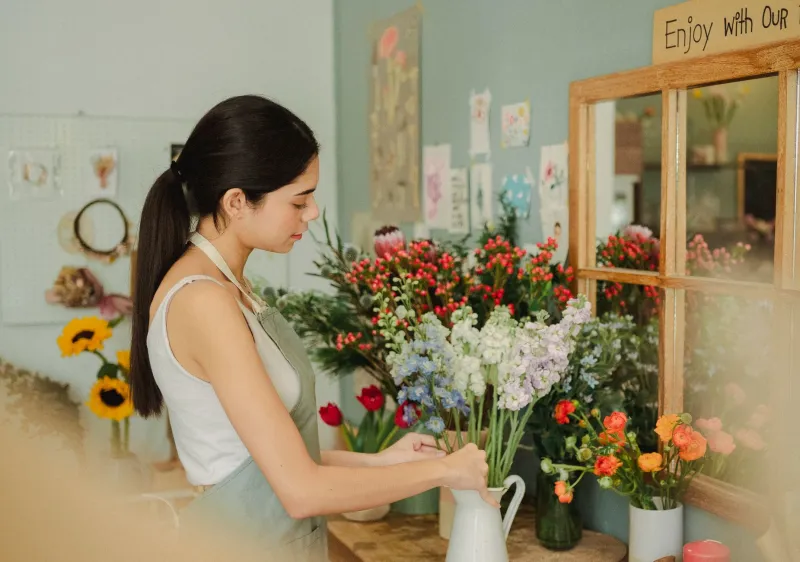
There's a good chance you've bought flowers recently without giving it a second thought. Maybe a bunch of sunflowers from Trader Joe's, a grocery store bouquet for a dinner party, or roses for Valentine's Day. Flowers feel like a natural part of everyday American life — a small, cheerful gesture that requires no explanation.
 Photo: Valentine's Day, via lavandamichelle.com
But for much of American history, cut flowers meant one thing: someone had died. The fact that they now sit on kitchen tables and office desks across the country is the result of a series of calculated moves by an industry that once depended almost entirely on grief.
A Business Built on Loss
In 19th century America, the florist's trade was inseparable from the funeral industry. Elaborate floral arrangements — wreaths, sprays, and casket pieces — were a central feature of Victorian mourning culture, which treated death as a formal, highly ritualized social event. Families of means were expected to fill the parlor with flowers as a visible sign of respect for the deceased. The more elaborate the arrangement, the more honor it conveyed.
For florists, this was reliable business. Funerals happened year-round, grief had no off-season, and the social pressure to provide flowers was strong enough that customers rarely questioned the cost. Florists built their livelihoods around this demand, and many operated in close proximity to funeral homes for exactly that reason.
Living rooms and dining tables, meanwhile, remained largely flower-free. The idea of buying cut blooms purely for decoration — for the pleasure of looking at them — was considered an extravagance limited to the very wealthy, who maintained their own greenhouse gardens. For ordinary Americans, flowers were for the dead.
The Railroad Solves a Logistics Problem
The first crack in this arrangement came not from a marketing campaign but from a technological one. The expansion of refrigerated railroad cars in the 1880s and 1890s transformed what was possible in the perishable goods trade. Suddenly, flowers grown in California or Florida could survive the multi-day journey to cities in the Northeast and Midwest without wilting into uselessness.
This created a supply problem that looked, to savvy florists, more like an opportunity. For the first time, cut flowers were available in large quantities, at lower prices, and across a far wider geography than ever before. The funeral trade alone couldn't absorb all of it. If the industry was going to grow, it needed new customers — and new reasons to buy.
The challenge was cultural. Flowers carried the weight of mourning. Convincing Americans to bring them into their homes for reasons unrelated to death required a fundamental shift in how people thought about blooms.
Valentine's Day and the Art of Rebranding
Florists didn't stumble onto their solution by accident. In the early 1900s, organized florist associations — the trade groups that would eventually coalesce into what became FTD (Florists' Transworld Delivery) — began an aggressive lobbying effort to attach flowers to existing American celebrations that had nothing to do with death.
Valentine's Day was the obvious first target. The holiday already carried romantic associations, and the red rose was an easy symbolic fit. Florist associations pushed hard to establish the flower gift as the expected gesture for February 14th, working with newspapers and retailers to normalize the idea. It worked with remarkable speed. Within a generation, giving roses on Valentine's Day had shifted from a novelty to a social expectation.
Mother's Day followed a similar trajectory. When President Woodrow Wilson officially recognized Mother's Day as a national holiday in 1914, florists were ready. They lobbied successfully to position the carnation — and flowers generally — as the appropriate gift for the occasion. Anna Jarvis, who had actually founded Mother's Day, was so horrified by the commercial appropriation of her holiday that she spent the rest of her life trying to get it abolished. The florists, needless to say, did not share her concern.
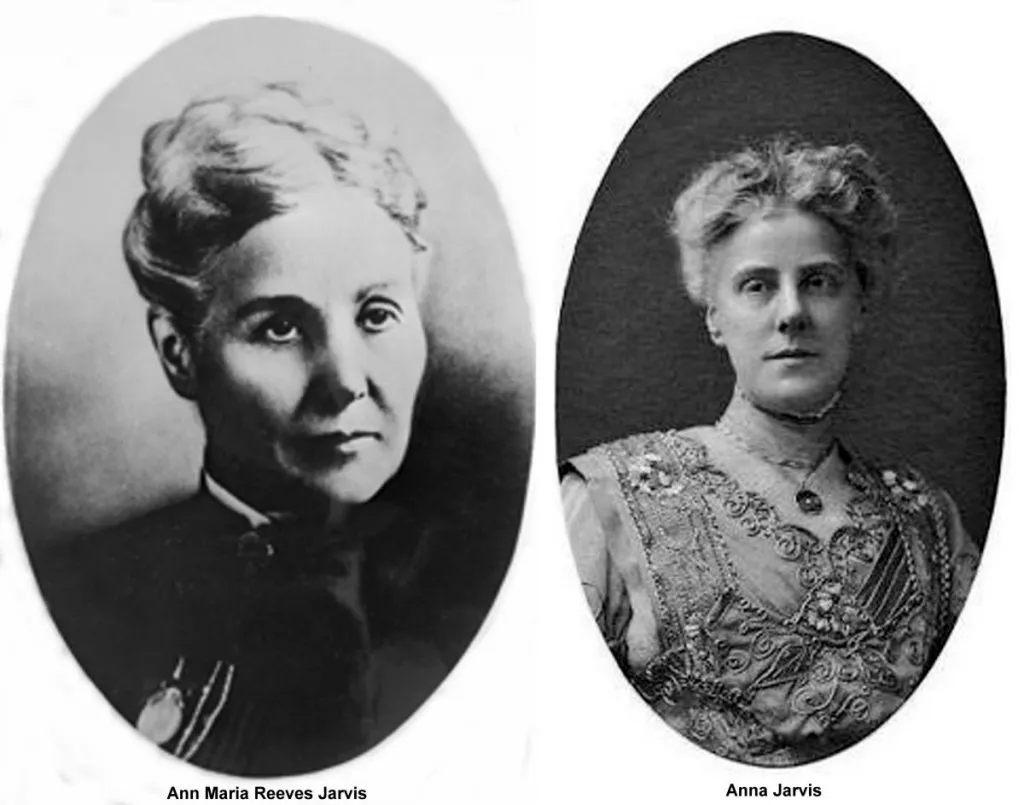 Photo: Anna Jarvis, via www.thevailvoice.com
 Photo: Mother's Day, via wallpapers.com
FTD and the Campaign That Moved Flowers Indoors
FTD, founded in 1910 as a wire service allowing florists to send orders across the country, became the industry's most powerful marketing engine. By mid-century, the organization was running national advertising campaigns that went well beyond specific holidays, nudging Americans toward the idea that flowers belonged in the home simply because they were beautiful.
The campaigns were subtle but persistent. Flowers appeared in advertisements for things that had nothing to do with grief — dinner parties, housewarmings, Sunday afternoons. The imagery slowly rewired cultural associations. A vase on a dining room table began to read as warmth and hospitality rather than mourning and loss.
Supermarkets accelerated the shift in the 1970s and 80s by adding floral departments, placing pre-made bouquets near the checkout line and making impulse purchases trivially easy. The $6.99 grocery store bouquet democratized what had once been either a luxury or a funeral expense.
Why It Still Matters
Today, the American cut flower industry generates roughly $4 billion annually, and the vast majority of that has nothing to do with funerals. Flowers appear at baby showers, corporate lobbies, first dates, and Tuesday dinners when someone just wanted to do something nice.
None of that happened organically. It was the result of an industry staring down a surplus problem and a cultural limitation, and choosing to engineer its way out of both. The florists who lobbied for Valentine's carnations and Mother's Day roses weren't trying to make the world more beautiful — they were trying to stay solvent.
They succeeded beyond anything they could have imagined. And in doing so, they quietly changed what Americans reach for when they want to say something words can't quite manage.