Nobody Needed Birthday Candles Until Someone Decided to Sell Them
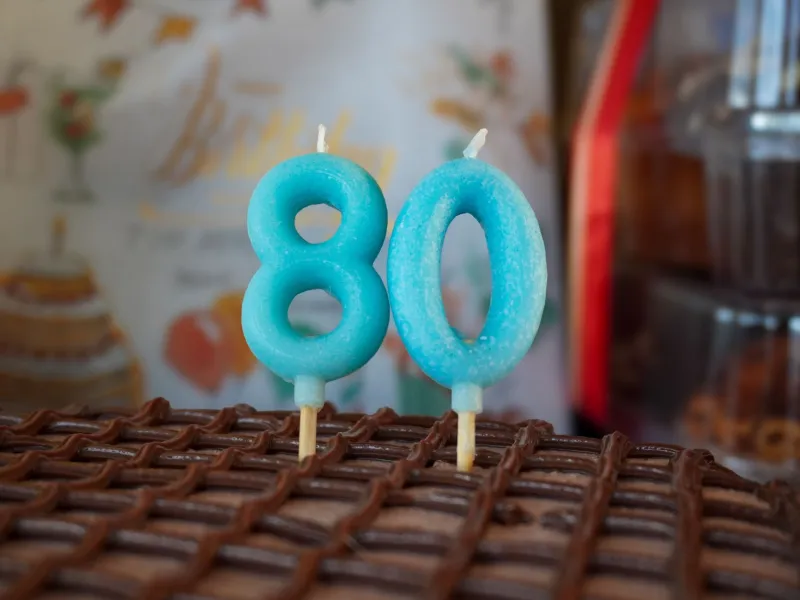
There is exactly one moment in the birthday cake ritual that nobody skips. You can buy a grocery store cake instead of baking one. You can skip the balloons, forget the streamers, and serve the wrong flavor of ice cream. But if there are no candles — no small waxy cylinders arranged by age, no moment of breathless blowing, no wish made in secret — something feels fundamentally wrong. The whole thing collapses.
Birthday candles are non-negotiable. Which is strange, because they were completely made up about a hundred years ago.
The Ancient History That Isn't
Ask someone where birthday candles come from, and they'll often gesture vaguely at antiquity. Ancient Greeks, maybe. Romans. Some ritual involving fire and the gods. It's the kind of answer that sounds plausible because candles are old and birthdays are old and surely someone, at some point, combined the two in a meaningful way.
They didn't. Or at least, not in any form that connects to what you're doing when you blow out the candles on your thirty-fifth birthday.
There are historical references to candles being placed on cakes — a German tradition called Kinderfest in the 18th century involved putting candles on a cake for a child's birthday, with one candle representing each year of life plus one extra for the coming year. Some historians point to this as a precursor. But Kinderfest was a regional practice, not a widespread tradition, and it had no direct line of inheritance into the American birthday ritual that emerged in the early 20th century.
The birthday candle as Americans know it — mass-produced, color-coded, sold in packs of 24 at every drugstore — is a product. It was designed, manufactured, marketed, and then retroactively given the feeling of timelessness.
The Bakery Problem
To understand why birthday candles exist, you have to understand the commercial bakery business in the early 1900s.
American bakeries in this era were facing a competitive problem. Home baking was still extremely common — most families baked their own bread and cakes as a matter of routine. Industrial bakeries could produce goods more cheaply and consistently, but they struggled to make their products feel special. A cake from a bakery was convenient, but a cake from the oven at home carried emotional weight that no commercial product could easily replicate.
Birthday cakes were an opportunity. They were already a recognized tradition — the idea of a special cake for a birthday celebration had existed in American culture since at least the mid-1800s. But they weren't yet ritualized in a way that required specific accessories. Bakeries and confectionery companies began looking for ways to add ceremony to their products, to create a moment around the cake that felt meaningful and memorable.
Candles were an obvious candidate. They were cheap to produce, visually dramatic, and they created a participatory moment — the blowing out, the wish — that transformed a passive consumption experience into something interactive. A cake with candles wasn't just a dessert. It was an event.
The Marketing Machine Takes Over
By the 1920s, American consumer culture had become extraordinarily good at creating needs that didn't previously exist. The advertising industry — still relatively young but already sophisticated — had figured out that the most durable products were the ones attached to emotion, ritual, and social expectation.
Birthday candles hit all three. Early advertising positioned them not as a novelty but as a requirement — the implication being that a birthday cake without candles was somehow incomplete, even neglectful. Greeting card companies, party supply manufacturers, and bakeries all had commercial incentives to reinforce the ritual, and they did so with remarkable consistency throughout the 1920s and 1930s.
The wish tradition amplified everything. Blowing out the candles in a single breath was already circulating as a folk custom by the early 20th century — the idea that a secret wish made at the moment of extinguishing the flames would come true if you didn't tell anyone. Nobody invented this exactly; it emerged from a general cultural soup of superstition and playfulness. But it was enormously useful to the people selling candles, because it made the act of blowing them out feel magical rather than arbitrary.
Once the wish was attached to the candle, the candle became untouchable. You couldn't remove it without also removing the wish. And nobody wants to take the wish away from a child.
How a Product Becomes a Memory
The genius of the birthday candle — and the reason it's worth examining — is the speed with which it moved from product to memory.
Within a single generation, birthday candles stopped being something you bought and became something you remembered. Adults who grew up in households where candles appeared on birthday cakes passed the practice to their children not as a consumer habit but as a family tradition. The commercial origin disappeared behind the emotional weight of personal history.
This is how manufactured traditions work. They need a gap — a moment in cultural life where a ritual is either absent or underdeveloped — and then they need a product that fills it convincingly. Birthday candles filled a gap perfectly: the birthday cake existed, the desire to mark another year of life existed, but the ceremony around the cake was still loose and undefined. Candles gave it shape.
The Candle That Refuses to Die
Today, birthday candles are a $300 million industry in the United States. There are candles shaped like numbers, candles that play music, candles that relight themselves after being blown out (a novelty that manages to be both delightful and infuriating), and candles in every color combination imaginable.
None of them are necessary. None of them solve a problem that existed before someone invented them. And yet the idea of removing them from the birthday ritual feels almost cruel — like canceling the wish before it's made.
That's the real achievement here. Not the candle itself, but the feeling that the candle has always been there. That it belongs. That a birthday without it isn't quite a birthday at all.
Someone decided that, roughly a century ago. And it worked so well that we've never really questioned it since.